
1896: Christopher Aubrey’s Taranaki
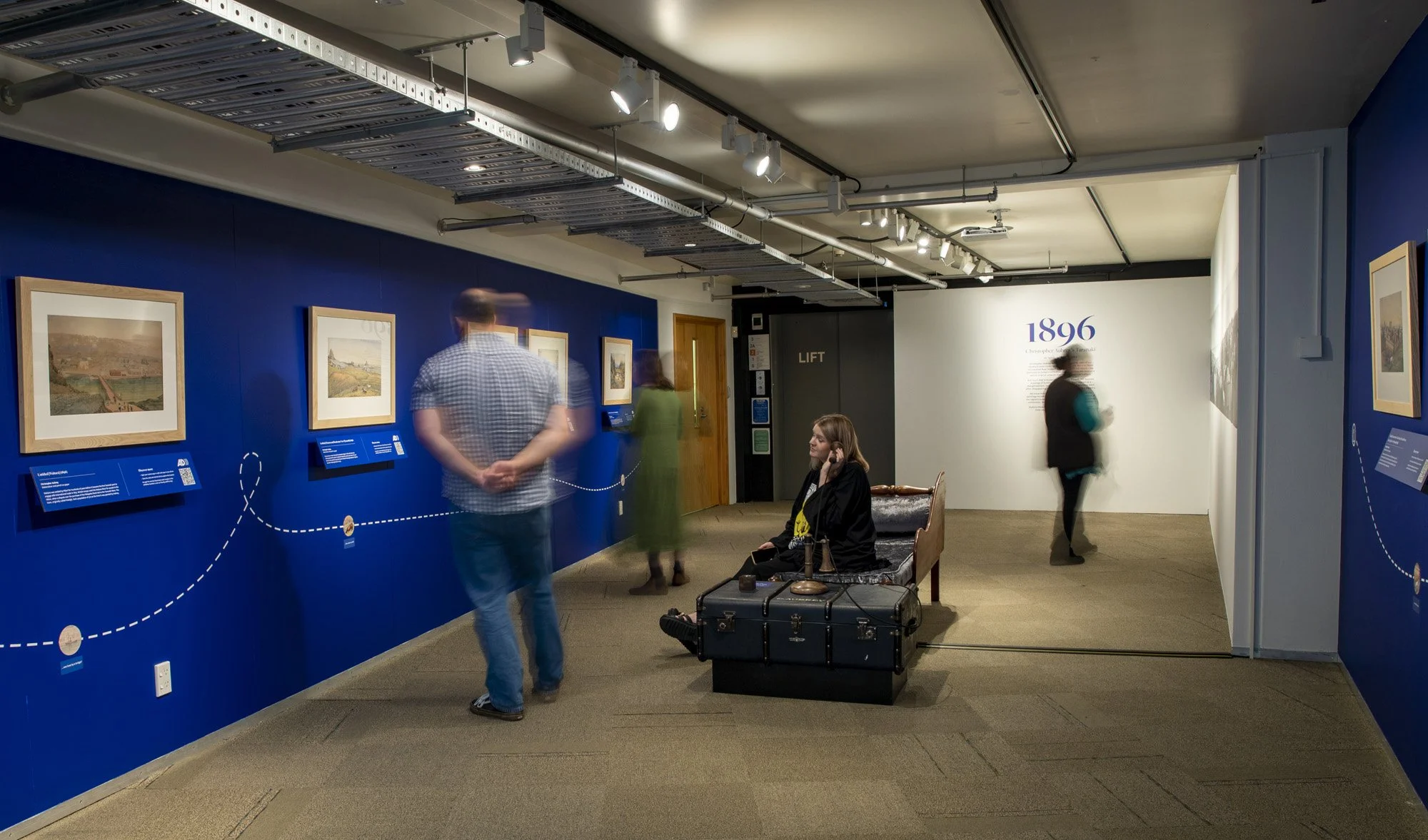
Photo by Rosie Moyes
Project: 1896: Christopher Aubrey’s Taranaki
Location: Puke Ariki Museum, New Plymouth, Aotearoa New Zealand
Dates: 16 April 2021 – 15 August 2021
Role: Digital coordination, collections photography, image digitisation, story map development, sound editing, audio description integration, interactive panorama production
Curator: Chanelle Carrick
Media: QR-linked story maps, interactive online displays, audio descriptions, environmental soundscapes, conservation photography, large-scale panorama print, interactive digital panorama
Tools / Methods: ArcGIS StoryMaps, virtual tour software, high-resolution digitisation, image stitching, digital compositing, audio recording and editing, QR-linked interpretation, hotspot mapping
Digital interpretation, QR-linked story maps, audio description, soundscapes, painting photography, and an interactive panorama developed to extend a small gallery exhibition into a substantial online experience.
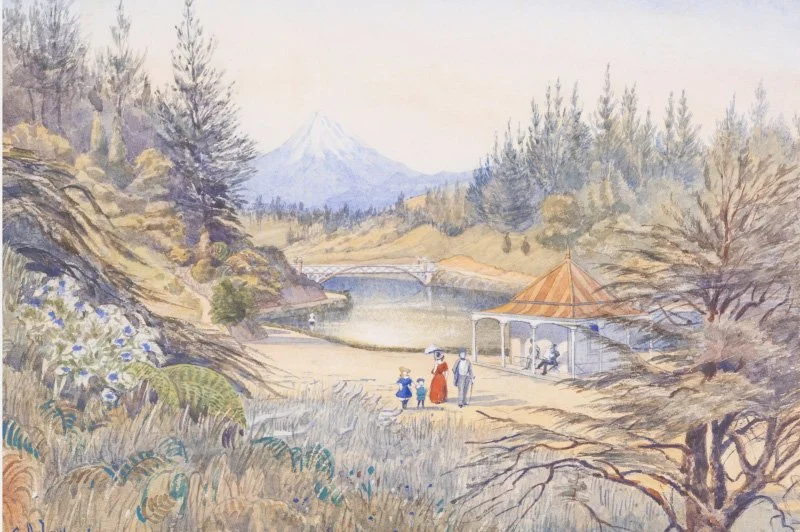
1896: Christopher Aubrey’s Taranaki was a compact exhibition with a large digital footprint. The exhibition brought together nine paintings from the Puke Ariki Heritage Collection, created by travelling artist Christopher Aubrey during his visit to Taranaki in 1896. Displayed together for the first time, the paintings offered a delicate and detailed view of the developing region and an optimistic image of colonial life, while also opening up deeper questions about what life in Taranaki was really like at the time. The exhibition ran at Puke Ariki from 16 April to 15 August 2021.
My role was to provide digital coordination, imaging, and creative technology support for the exhibition, working closely with curator Chanel Carrick and the curatorial team. The central idea was to keep the physical exhibition simple and focused, with the nine paintings presented in the gallery, while using QR codes and online storytelling to give each work a much deeper interpretive layer.
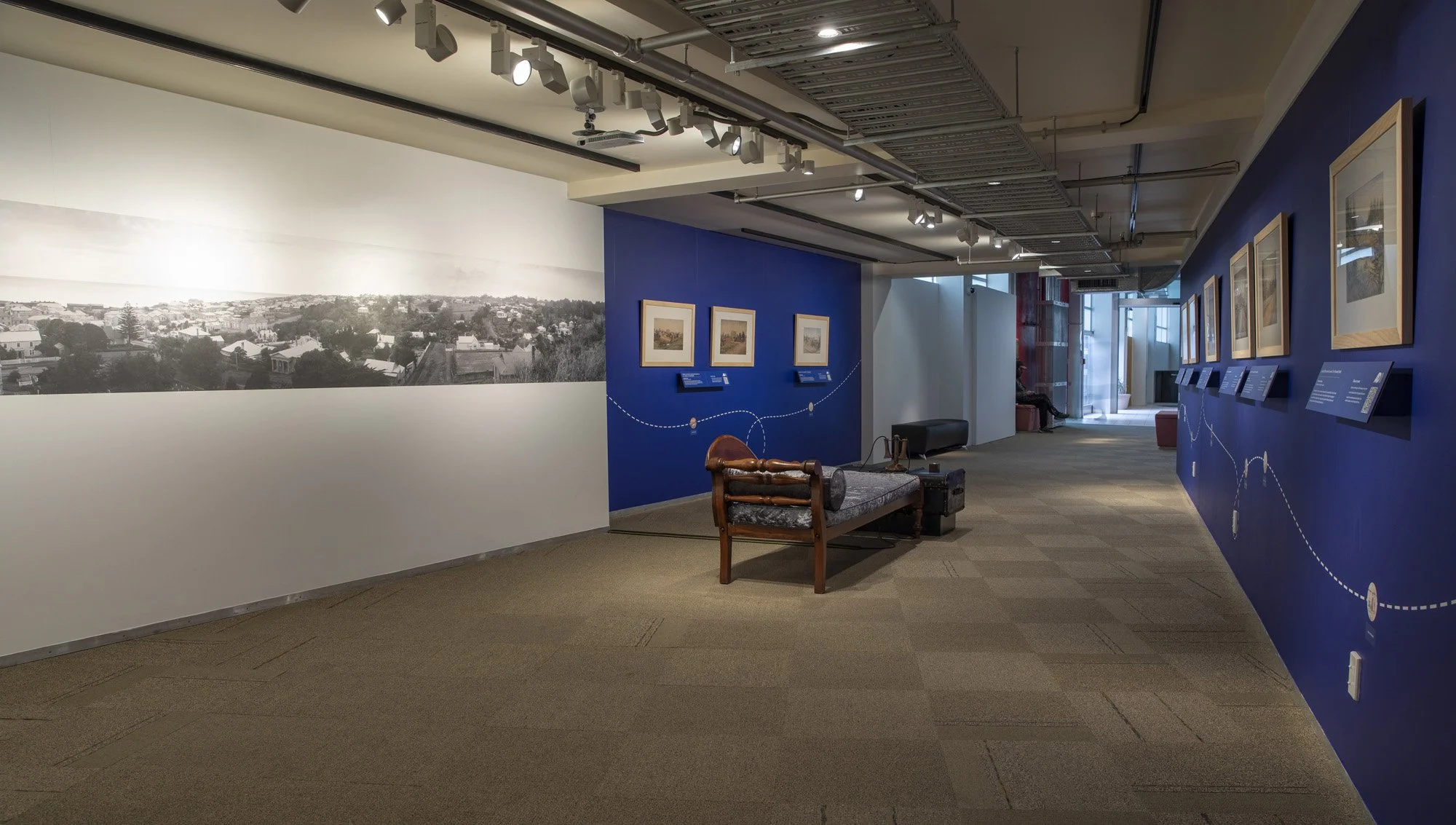
Photo by Rosie Moyes
Each painting was paired with a QR code linking to its own digital story map. These online stories functioned almost like individual mini-exhibitions, combining curatorial research, historic images, contextual information, before-and-after location comparisons, audio description, and environmental soundscapes. This was one of the first Puke Ariki exhibitions where we used QR codes in a highly intentional way, not as generic links but as clearly framed gateways to expanded interpretation.
Photo by Rosie Moyes
The story maps allowed visitors to move between the physical paintings and deeper online content using their own devices. They also extended the life of the exhibition beyond the gallery, creating a permanent online resource that remained accessible after the physical show closed. The museum page invited visitors to scan QR codes in the gallery to explore the history of each location through interactive online displays featuring information, historic images, and before-and-after photographs from locations across Taranaki.
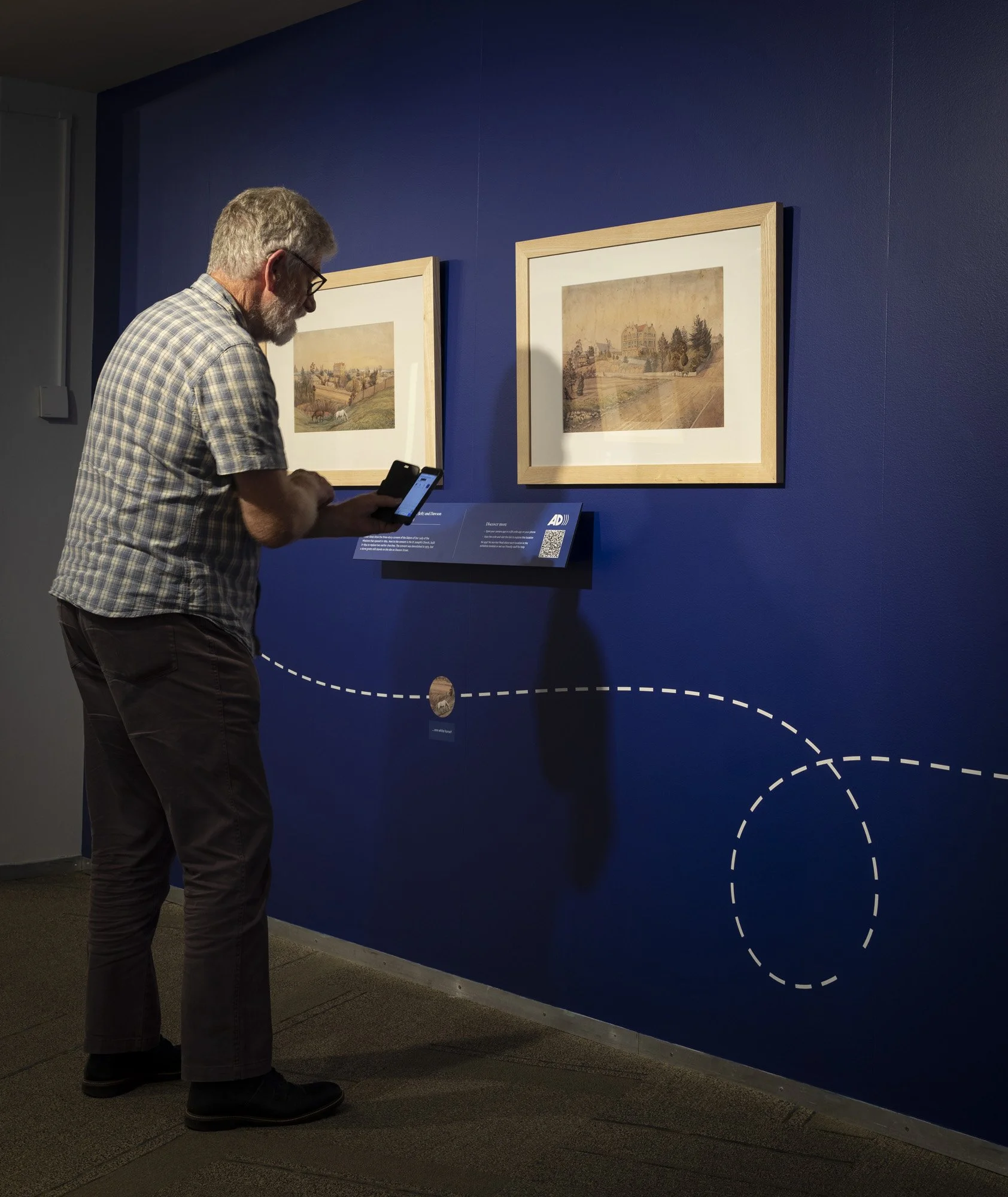
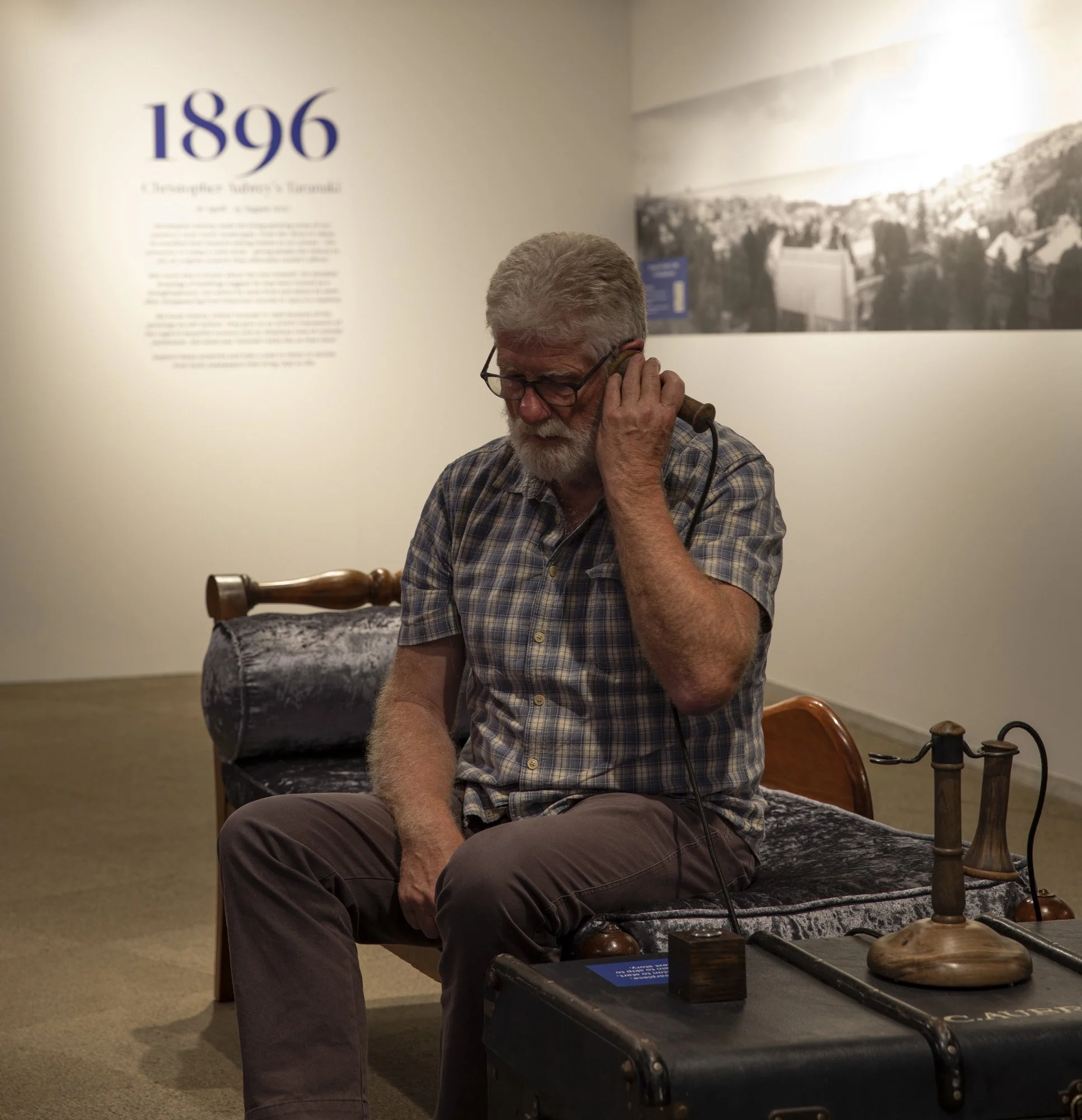
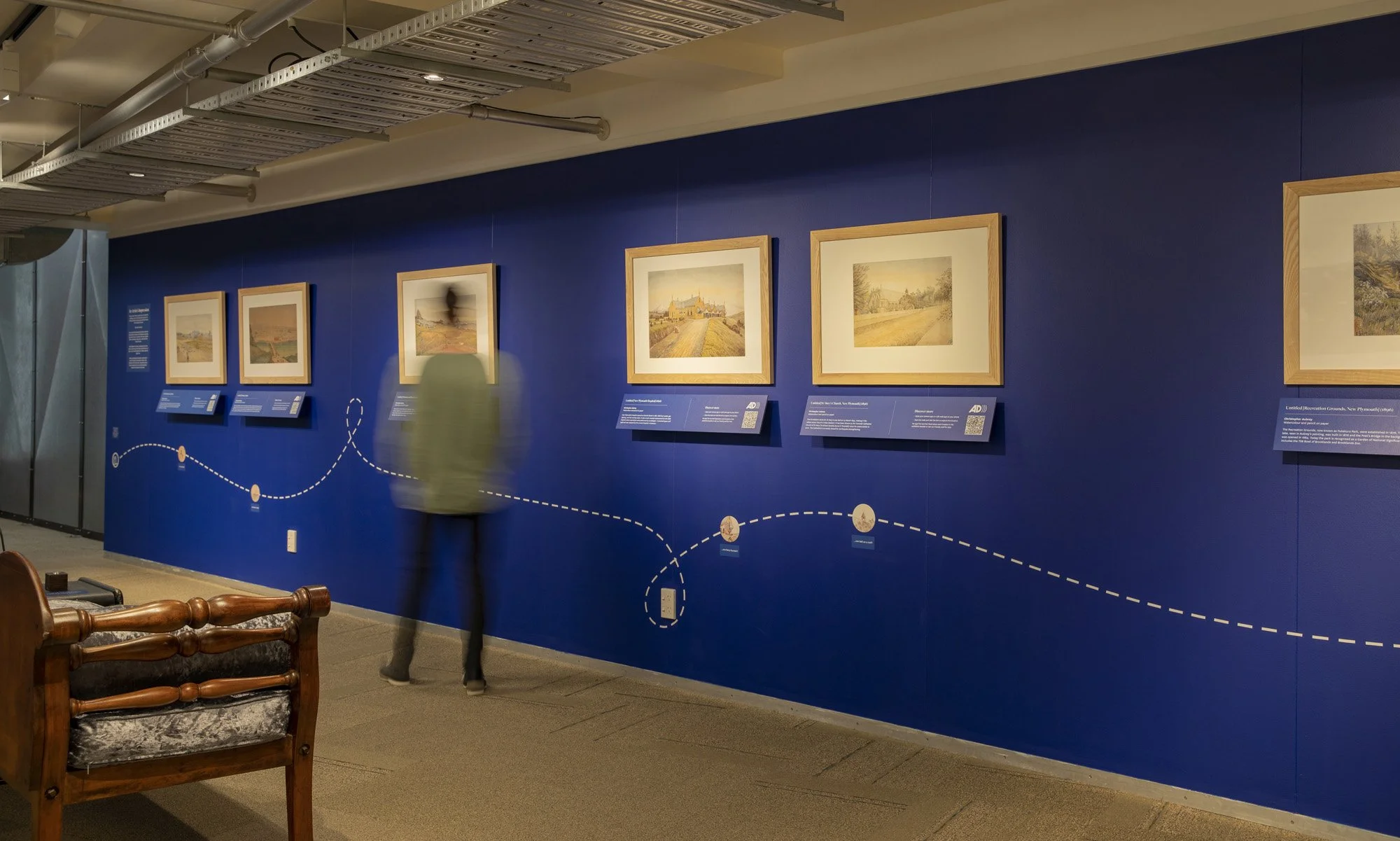
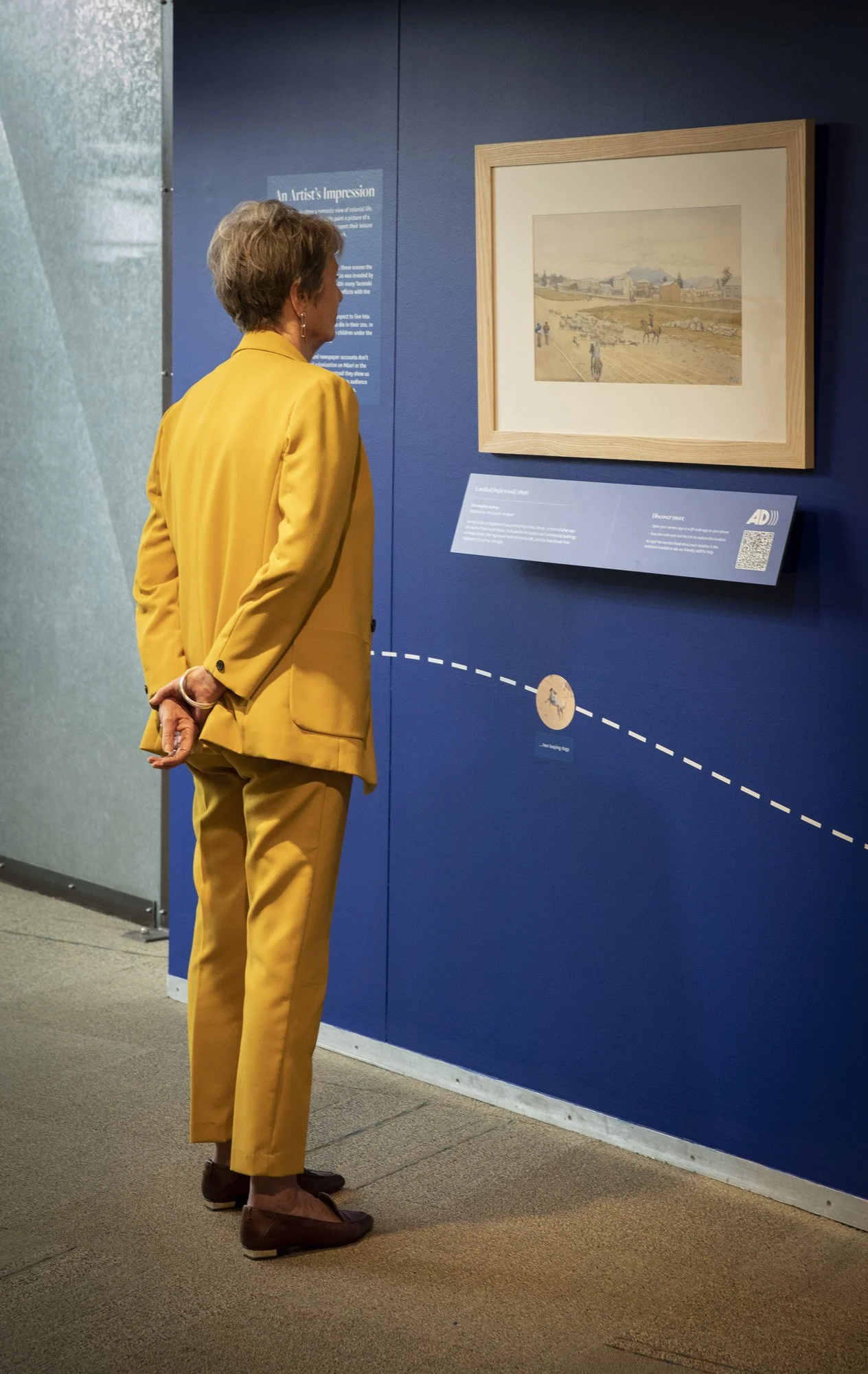
Photos by Rosie Moyes
I also photographed the Aubrey paintings before and after conservation, creating a visual record of their treatment and supporting the digital interpretation of the works. These images were incorporated into the wider online experience, helping visitors understand the paintings both as historical documents and as collection objects with their own material history.
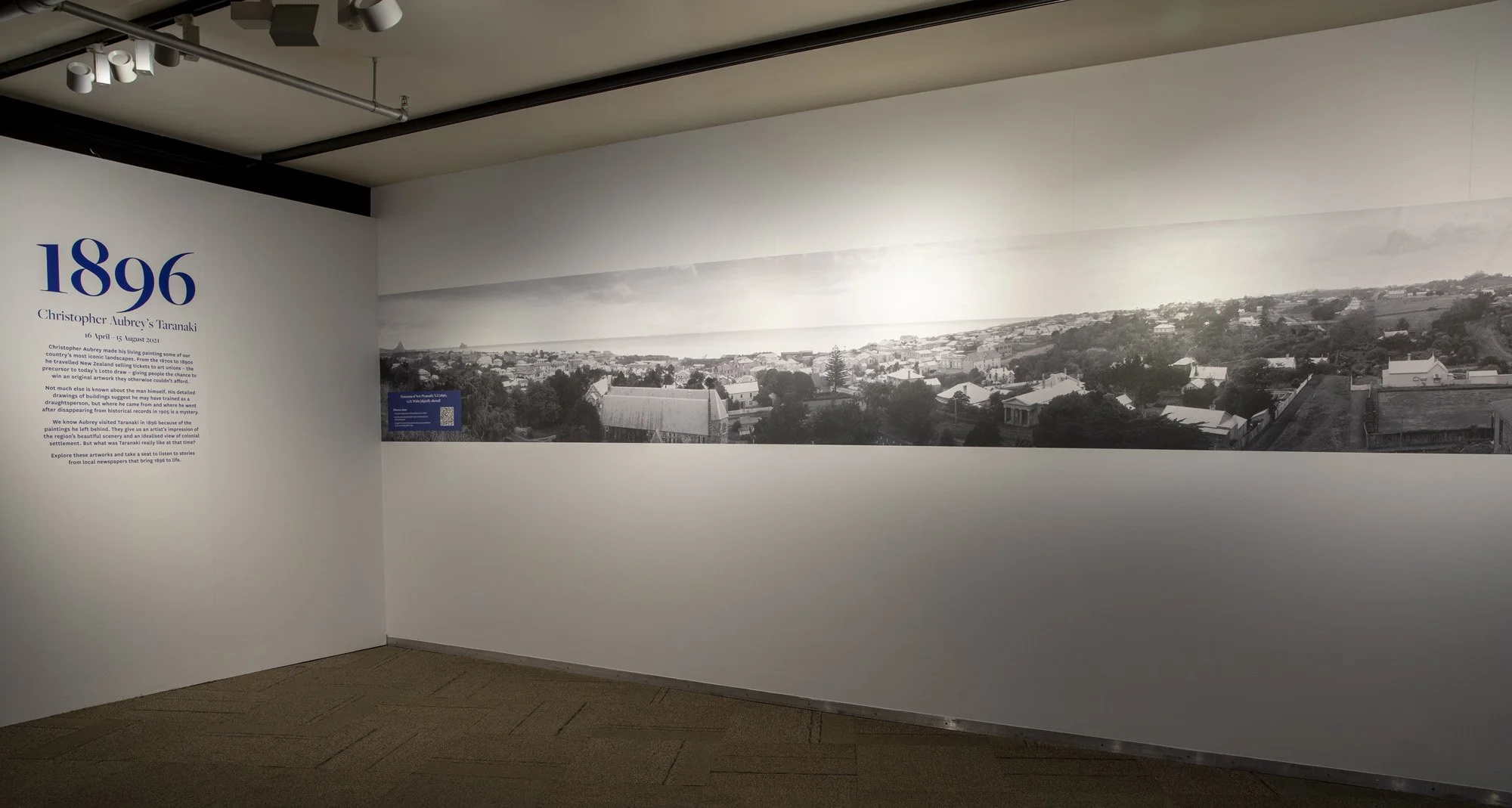
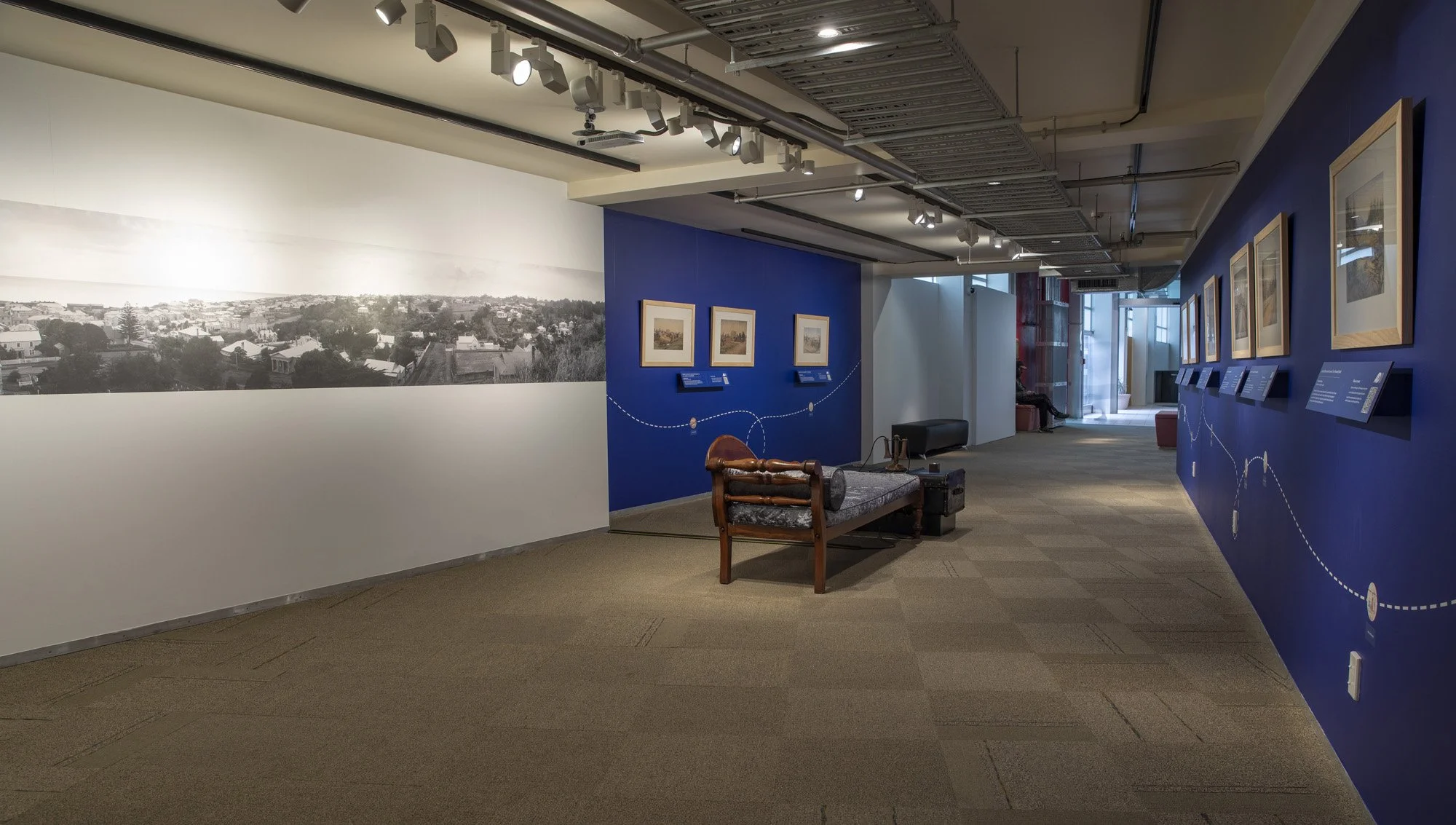
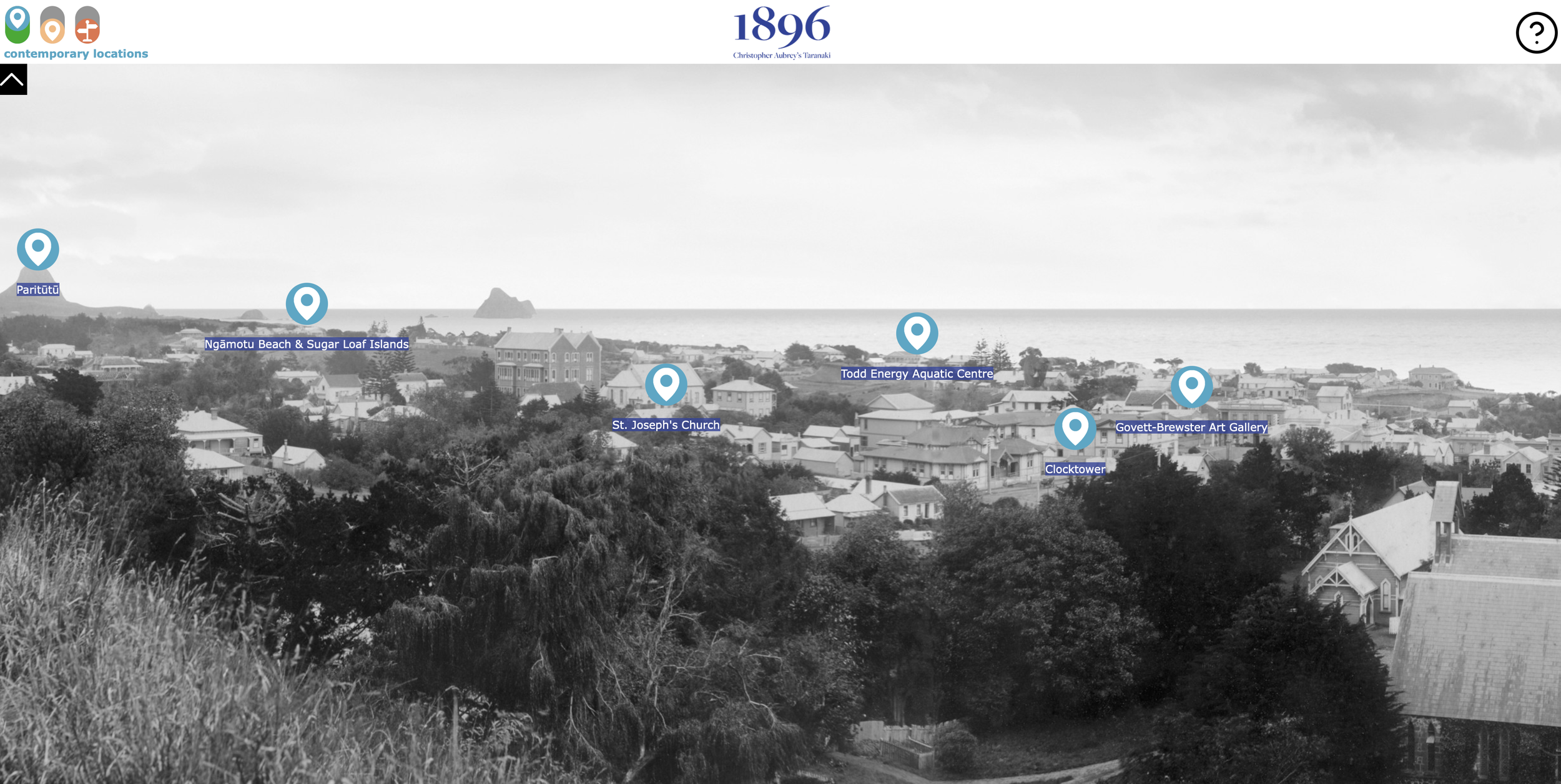
A major companion component was the 1896 New Plymouth Panorama, based on a six-part photographic panorama taken from Marsland Hill in the same year Aubrey painted the region. I digitised the original photographic plates, created a high-resolution stitched composite, cleaned and repaired the image, composited the sky, and prepared the final panorama for large-scale wall presentation. The resulting image became both a physical gallery feature and an interactive digital object.
For the online version, I used virtual tour software to create an interactive panorama that allowed visitors to zoom into the image and explore hotspots embedded across the cityscape. These hotspots highlighted historic buildings, landmarks, streets, and locations visible in the 1896 view. The museum page described the panorama as a way to explore New Plymouth from Marsland Hill, discover historic locations that once lined the streets, and compare them with current landmarks and streets.
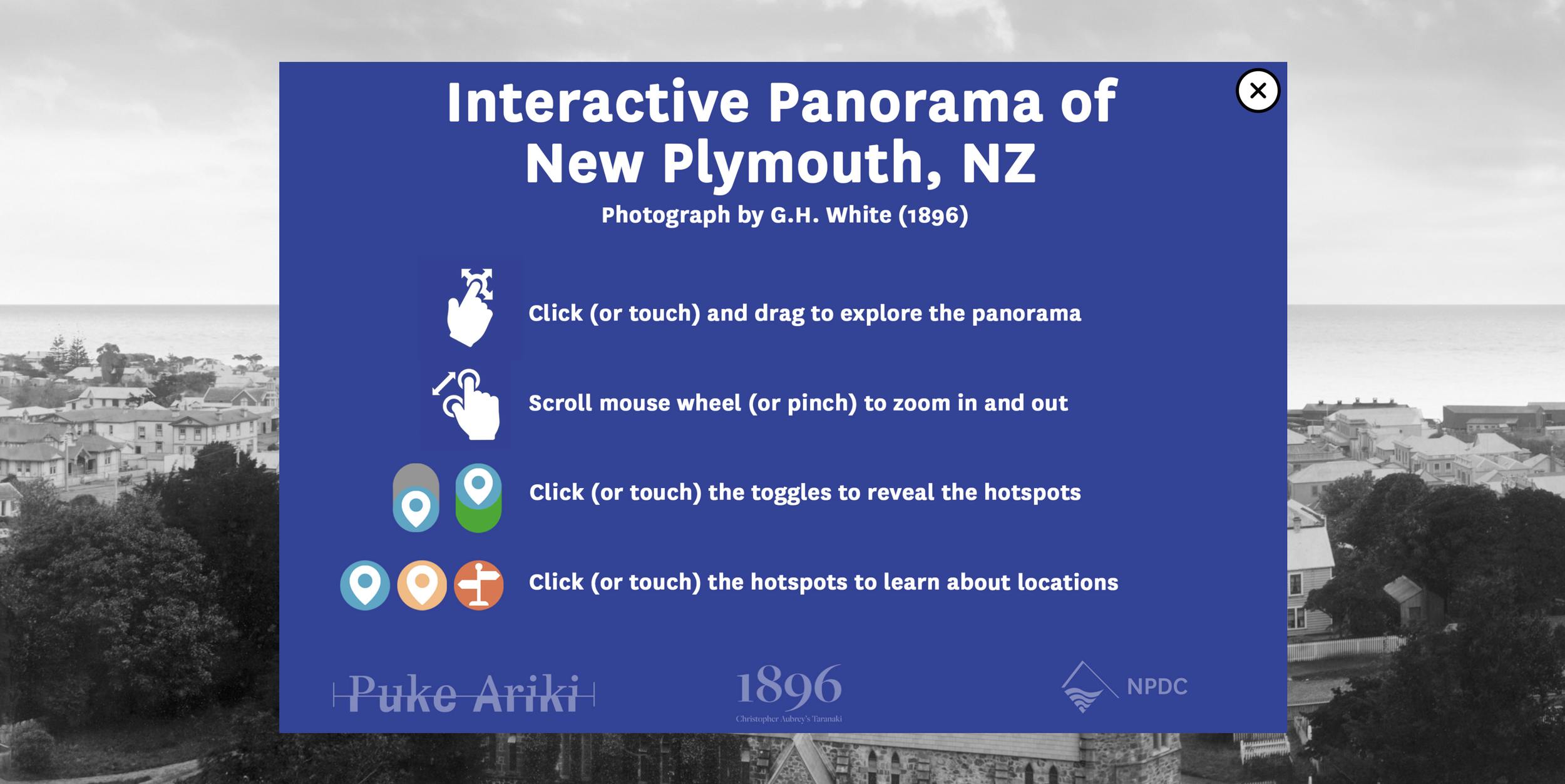
One of the strongest aspects of the panorama was its ability to connect multiple Puke Ariki resources within a single interactive environment. Hotspot categories allowed visitors to explore important sites from the period, and street hotspots connected directly to Word on the Street, another Puke Ariki resource about the history of New Plymouth street names. This made the panorama more than a digitised image; it became a navigational interface into the museum’s wider historical content.
The exhibition also included audio description and sound-based interpretation. Following GLAM-sector training in audio description, staff members recorded spoken descriptions for each painting, improving accessibility while bringing different voices into the exhibition experience. I recorded, edited, and integrated these descriptions into the story maps. I also created soundscapes for several of the paintings, building atmospheric audio environments that suggested what each location might have sounded like in 1896. Church bells, birds, water, crowds, ducks, geese, and music from the Pukekura Park band rotunda helped add a sensory layer to the visual and historical interpretation.
Together, these components transformed a focused display of nine paintings into a layered digital exhibition. The project combined collections photography, conservation documentation, online storytelling, accessibility, sound design, interactive media, and historical research. It was also an important early experiment in using StoryMaps and QR codes as part of Puke Ariki’s exhibition practice, demonstrating how a modest physical exhibition could generate a rich, durable, and interconnected digital experience.
This project reflects my broader approach to digital museum work: using technology to deepen interpretation, connect collections to place, and create meaningful pathways between gallery experiences and online access.