
Whakarūaumoko: Active Earth
Tongapōrutu Exhibition Environment
Tongapōrutu, 2024. N.Setteducato & R.Moyes. Copyright Puke Ariki.
Project: Tongapōrutu Exhibition Backdrop
Exhibition: Whakarūaumoko: Active Earth
Location: Puke Ariki Museum, New Plymouth, Aotearoa New Zealand
Role: Digital imaging, photography, compositing, AI-assisted image development, digital exhibition support
Curator: Lucy MacFarlane
Collaborators: Rosie Moyes, Lucy MacFarlane, Puke Ariki exhibition team
Media: Large-scale photographic print, floor graphic, digital interactives, video installation
Tools / Methods: Digital photography, image stitching, 3D modelling, Adobe Photoshop, generative AI, exhibition print preparation
Large-scale exhibition photography, digital compositing, AI-assisted image production, and interactive media for the redevelopment of Puke Ariki’s geology exhibition.
As part of the long-term redevelopment of Whakarūaumoko: Active Earth at Puke Ariki Museum, I worked with the digital team to help create a large-scale visual environment based on Tongapōrutu, one of Taranaki’s most recognisable coastal landscapes. The exhibition design was centred around an existing low-resolution helicopter image of the coastline, but the final gallery space required a new high-resolution image that could be printed at architectural scale and integrated with the physical layout of the exhibition.
The challenge was not simply to replace the original image. The location, composition, and distinctive rock formations were central to the exhibition narrative, and the design of the space had already been developed around the visual structure of the reference image. The final treatment needed to preserve the identity of Tongapōrutu while creating the immersive effect of standing on the beach, with a wall-sized photographic backdrop extending naturally into a printed floor treatment.
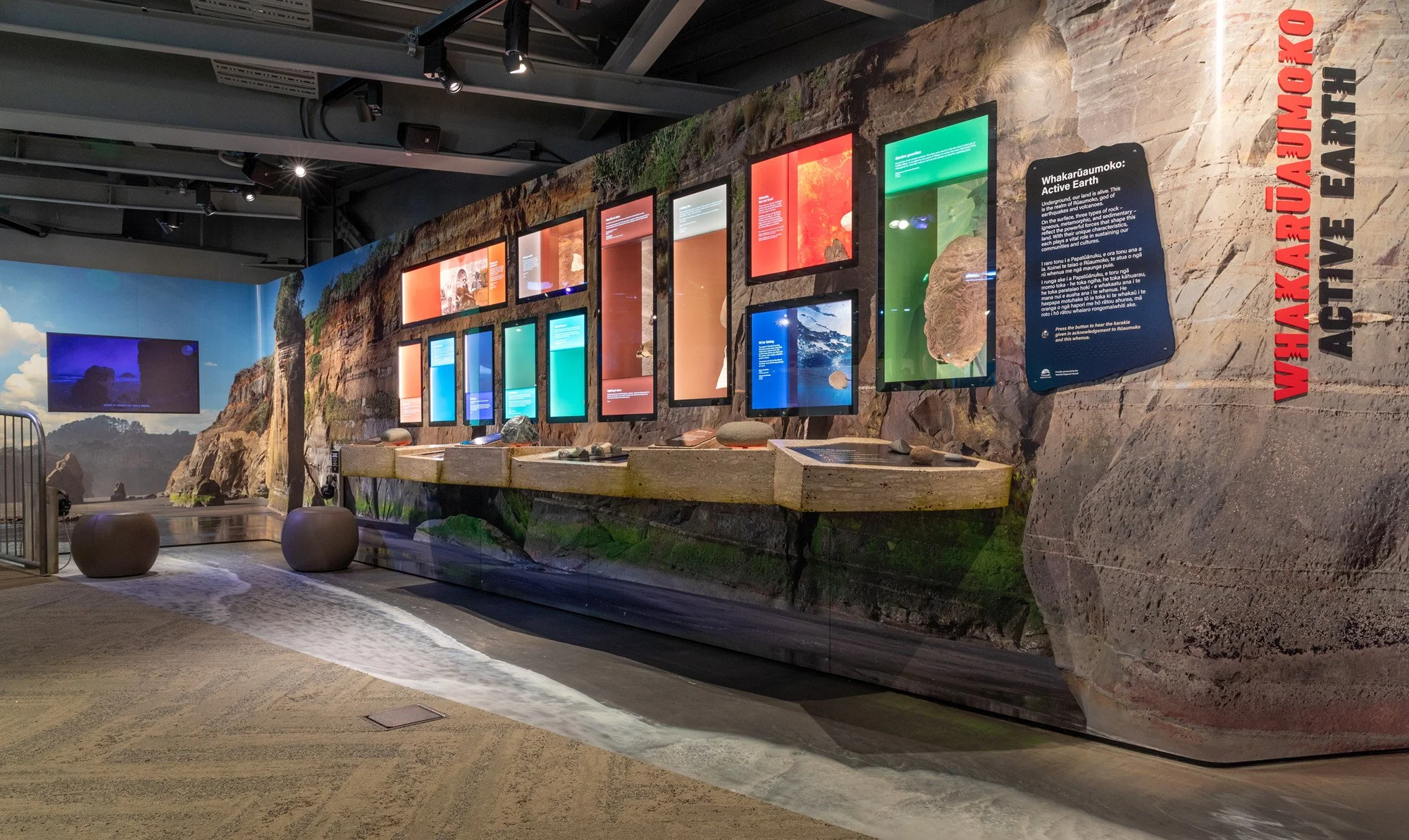
photo by Rosie Moyes
Working with colleague Rosie Moyes, we planned, captured, and developed the final wall and floor images. After initial reconnaissance shoots and consideration of drone-based approaches, we determined that the best result would come from a high-resolution photographic composite captured from ground level. To prepare for the final shoot, we created a basic 3D model of the Tongapōrutu coastline and rock formations, allowing us to test camera positions, lens focal-length choices, and compositional alignment before returning to the site.
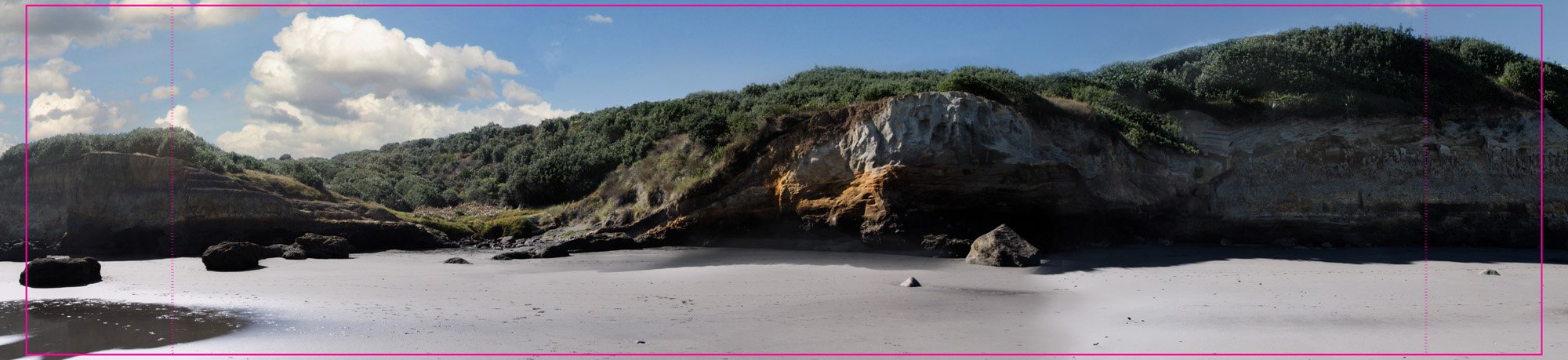
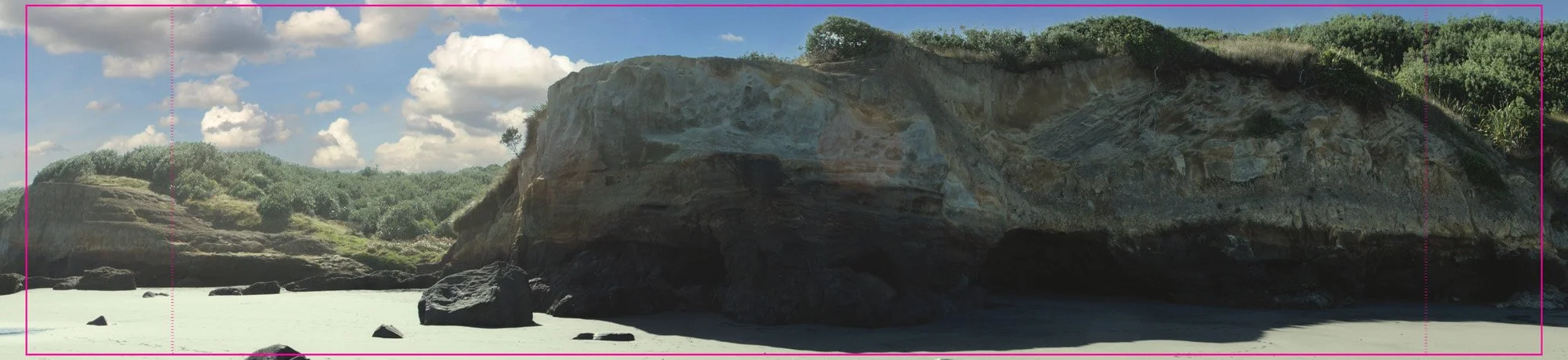
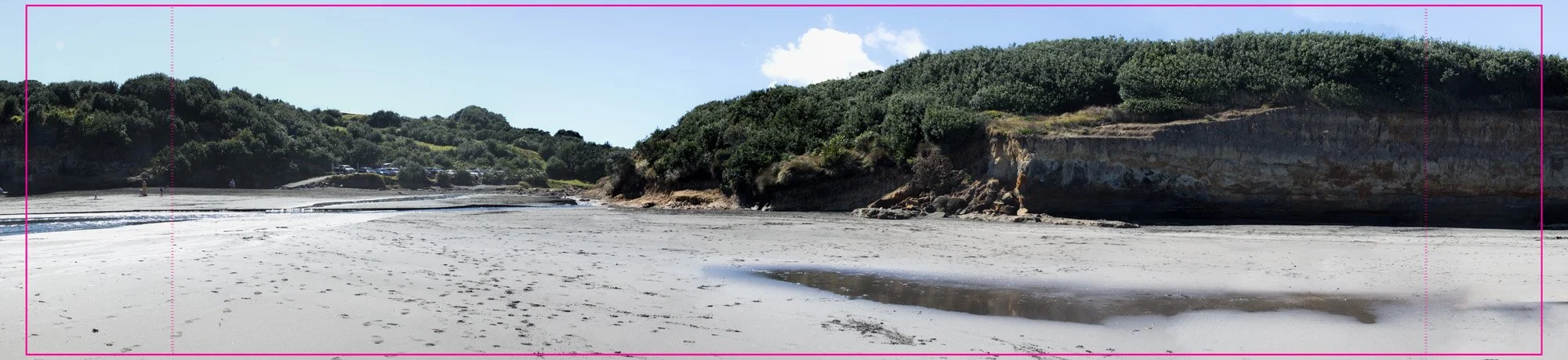
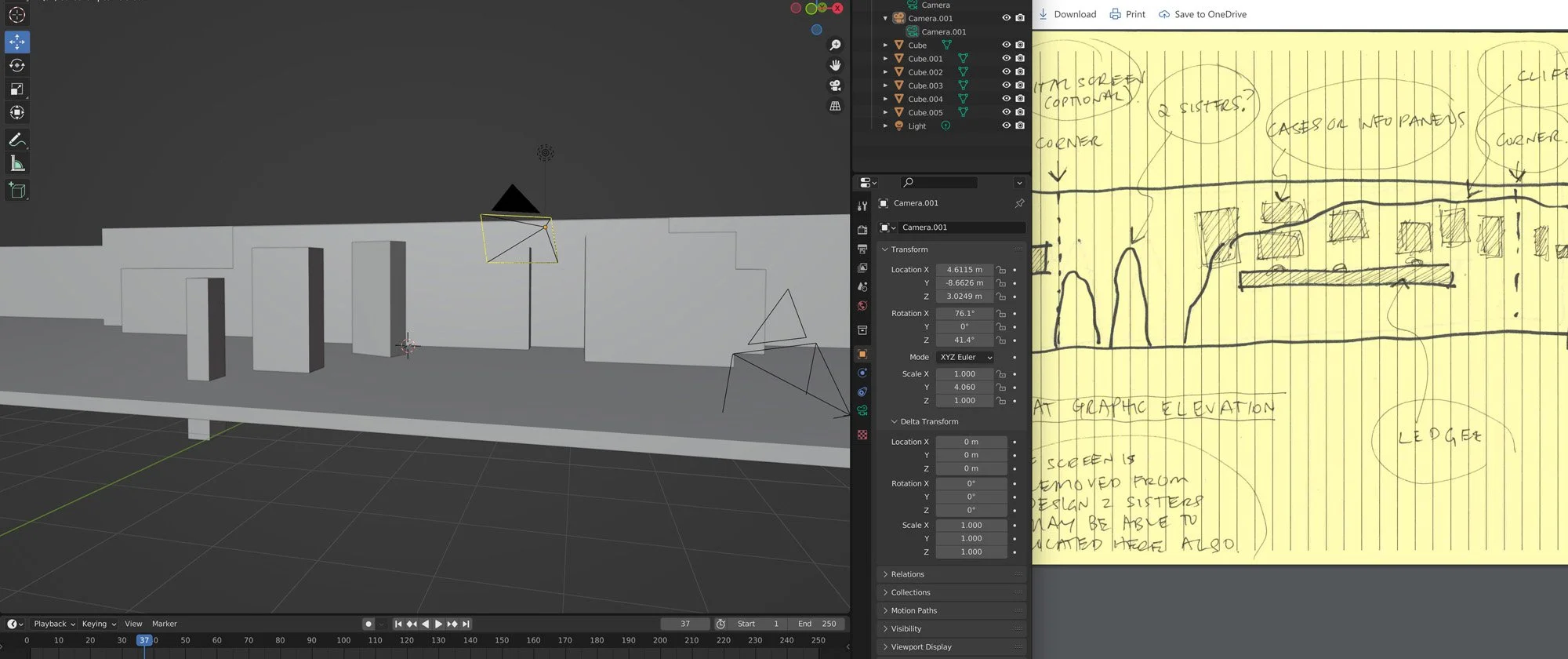
Blender 3D mock-up and working sketch
The final image was captured as a sequence of handheld portrait-format photographs, taken from left to right while standing in the surf. This required careful planning around tide, weather, seasonal light, and site access. Because the beach is only accessible at very low tide, and because the winter light window was limited, the shoot had to be timed precisely to allow enough time to reach the location, capture the image, and return safely.
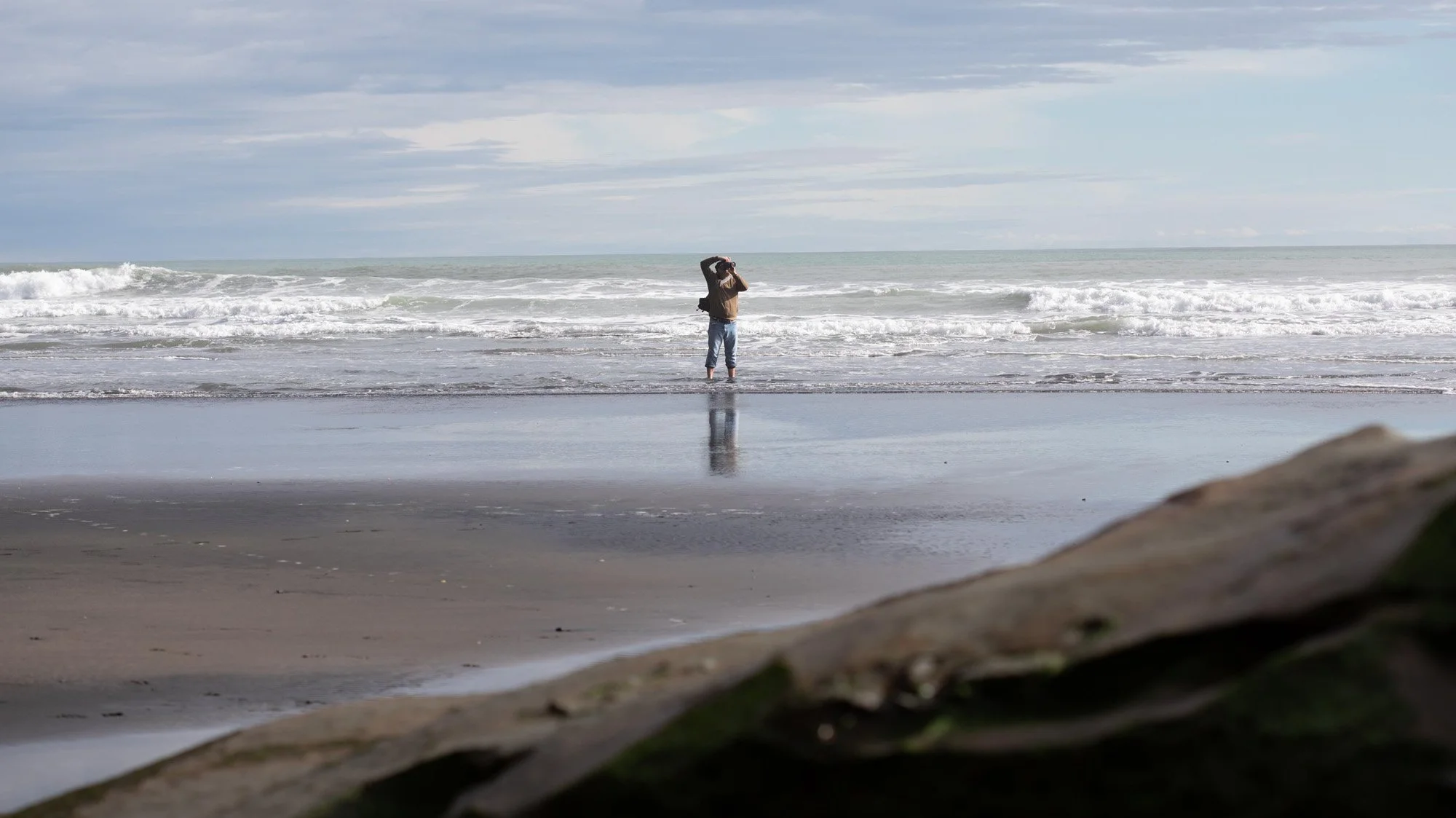
Capturing the backdrop image, knee-deep in the surf. Photo by Rosie Moyes.
In addition to the wall backdrop, I developed the digital workflow for the printed floor image, which needed to extend the beach environment outward from the base of the wall and create the illusion of continuity between the photographed landscape and the physical gallery space. This involved working from source photographs taken at the base of the cliff, experimenting with early generative AI tools, and combining Adobe Photoshop’s emerging generative features with external AI image tools such as Magnific AI. Through a process of testing, compositing, refinement, and scale-aware image production, we developed a floor treatment that could function as an immersive extension of the coastal environment.
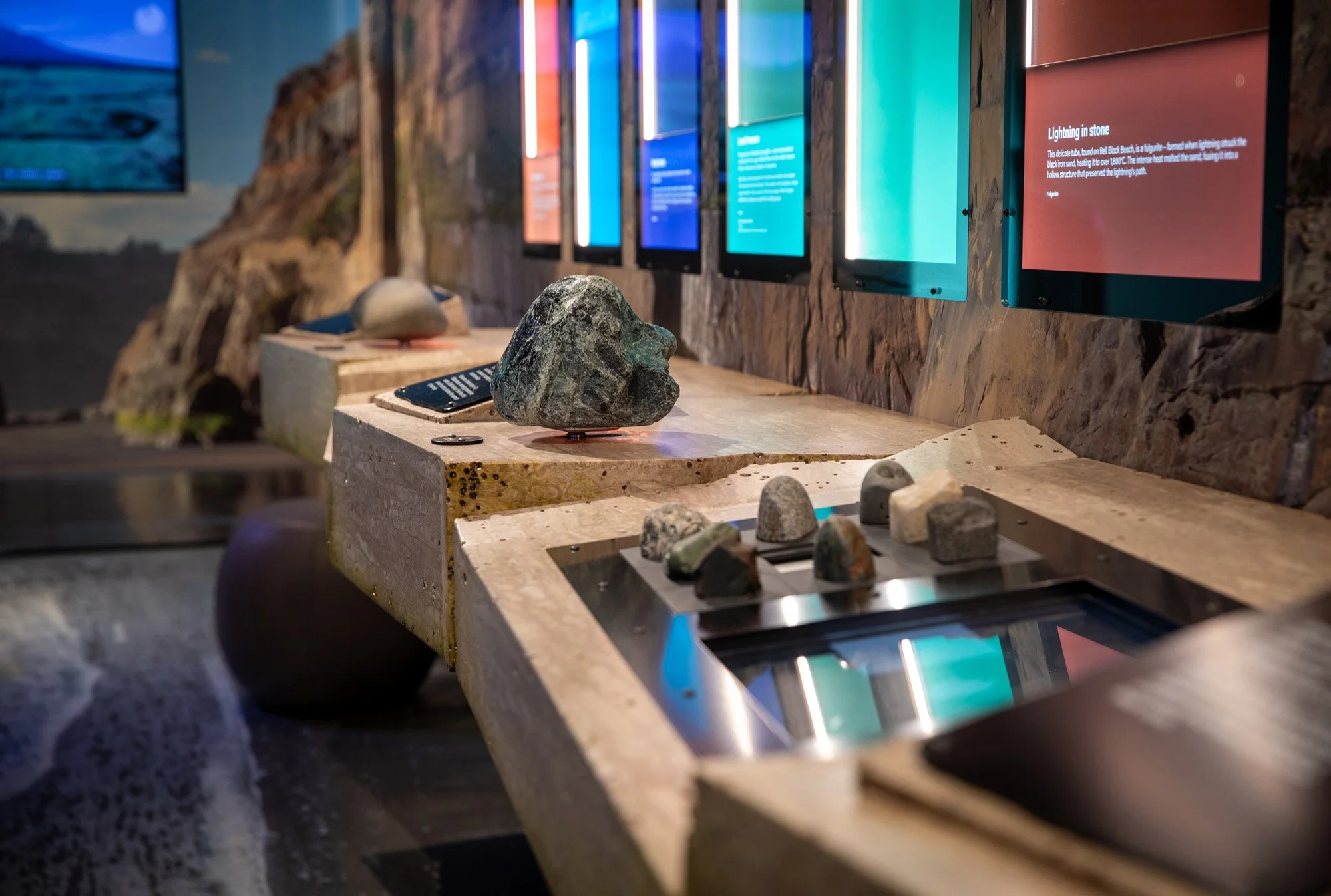
Photo by Rosie Moyes
The final installation required close attention to spatial mapping, scale, perspective, and print layout. The wall image wrapped around the exhibition space in multiple sections, and the floor image needed to align convincingly with the backdrop while accommodating the physical geometry of the gallery. This involved a combination of digital imaging, modelling, measurement, and practical problem-solving to translate a complex coastal landscape into a coherent exhibition environment.
The Tongapōrutu backdrop and floor became a central visual feature of the renewed Active Earth space, supporting the exhibition’s broader focus on geology, erosion, landscape change, and the relationship between people and place in Taranaki. Alongside this work, I also contributed to other digital components in the exhibition, including an interactive game and a permanent video installation exploring the erosion history of the Tongapōrutu coastline.
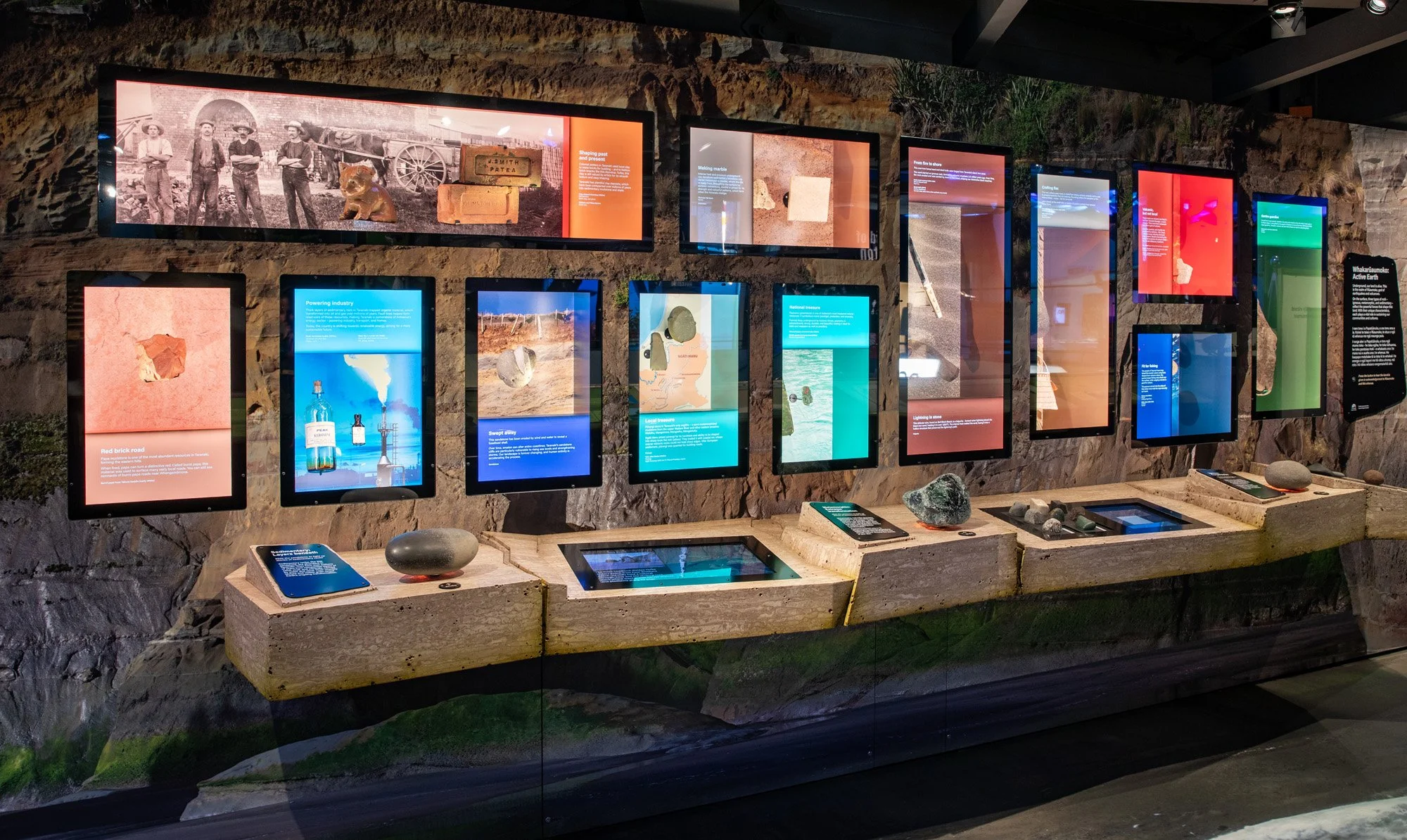
Photo by Rosie Moyes.
While on site at Tongapōrutu for the final photography shoot, we also used the narrow low-tide window to experiment with new 3D capture workflows. Using an iPhone 13, LiDAR scanning, and mobile 3D modelling tools such as Scaniverse, we captured a series of textured scans of the coastline, including cliff faces, rock surfaces, and distinctive geological features.
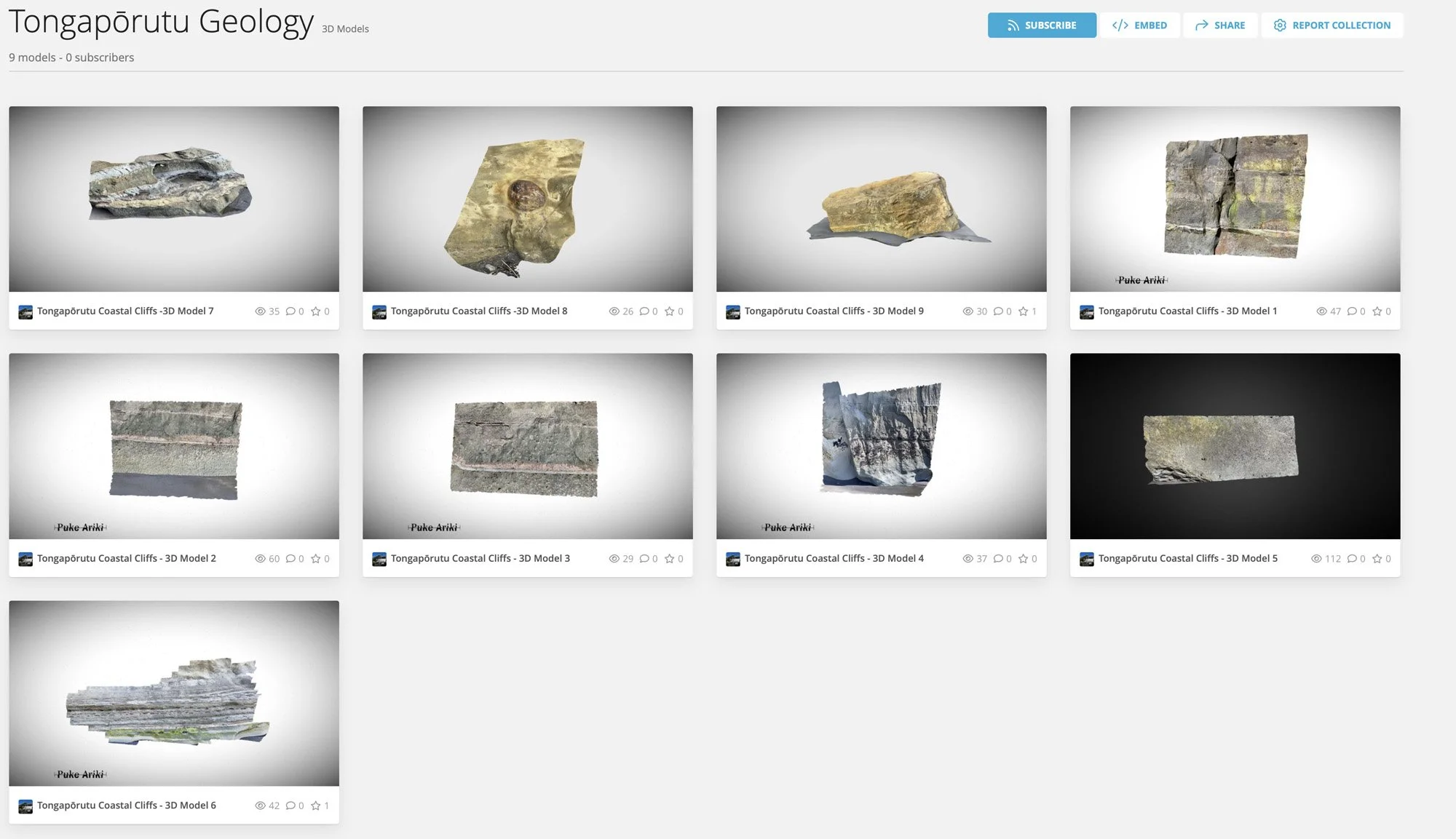
This was a small but valuable extension of the project. In addition to producing the large-scale exhibition imagery, we were able to create a set of digital 3D records from the same site visit, using lightweight tools that could be deployed quickly in the field. The resulting models were uploaded to the Puke Ariki Sketchfab page, creating an additional online access point for audiences to explore the textures, forms, and geological character of Tongapōrutu beyond the physical exhibition space.
This component reflected a broader interest in using accessible emerging technologies to support museum interpretation, digital preservation, and public engagement. It also demonstrated how fieldwork for one exhibition outcome could generate additional digital assets for online access, experimentation, and future reuse.
This project brought together photography, digital compositing, emerging AI tools, exhibition design, environmental storytelling, and technical problem-solving. It reflects the kind of interdisciplinary digital work I have developed across my museum career: combining visual production, technology, collections and exhibition knowledge, and practical delivery in service of public engagement.