
Inside the Artists’ Studios VR
Project: Inside the Artists’ Studios
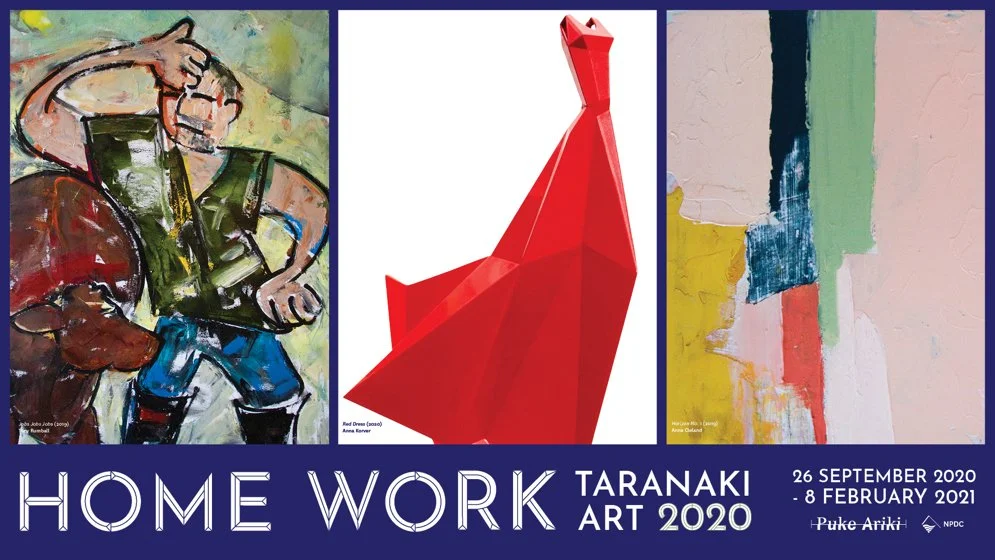
Exhibition: Home Work: Taranaki Art 2020
Location: Puke Ariki Museum, New Plymouth, Aotearoa New Zealand
Dates: 26 September 2020 – 8 February 2021
Role: VR content development, artist interviews, video production, digital coordination, artist profile photography, online publishing, virtual tour creation
Curator: Laura Campbell
Media: VR180 artist studio films, Oculus headset installation, YouTube videos, artist portraits, virtual exhibition tour, interactive digital ruru hunt
Tools / Methods: VR180 stereoscopic video, artist interviews, video editing, YouTube publishing, exhibition photography, virtual tour development, online interpretation
Presentation: National Digital Forum, Adventures in Creating Original Virtual Reality Content with Limited Resources, Time and Budget
Original VR180 artist studio films and virtual reality installation developed for Home Work: Taranaki Art 2020. I visited eight participating artists, filmed and interviewed them in their studios, produced short immersive video portraits, and installed the work on an Oculus headset in the gallery, while also publishing the videos online where they reached close to 100,000 views.
Home Work: Taranaki Art 2020 was the third iteration of Puke Ariki’s regional art exhibition, bringing together new and unseen works by local artists from around Taranaki Maunga. The exhibition celebrated the region’s creative community, with 57 works selected from established and emerging artists across painting, printmaking, sculpture, and other media. It ran in Puke Ariki’s Temporary Gallery from 26 September 2020 to 8 February 2021.
My main contribution to the exhibition was Inside the Artists’ Studios, an original virtual reality content project designed to give audiences a deeper understanding of the artists, their workspaces, and their creative processes. I also photographed artists for their exhibition profiles and supported the broader digital layer of the exhibition, including the online artist content and virtual tour material.
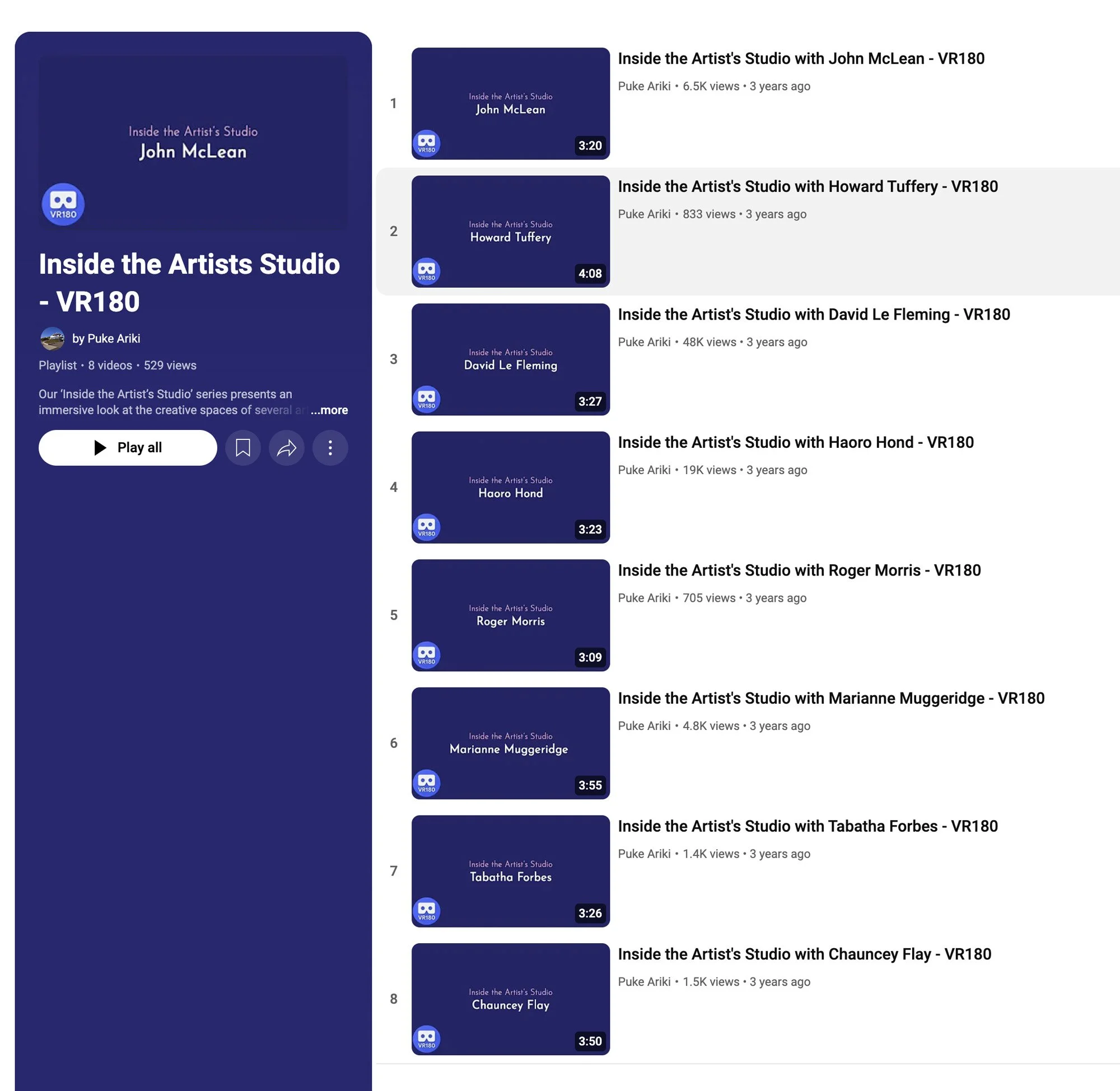
For Inside the Artists’ Studios, we selected eight participating artists and created a series of short VR180 video portraits. I visited each artist’s studio, interviewed them, filmed their workspace and process, and produced short vignettes that combined their voice, environment, materials, technique, and creative philosophy. The videos were captured using a specialised stereoscopic VR180 camera, allowing viewers to look around the studio space and experience each artist’s working environment in a more embodied way.
The project was both a content initiative and a digital experiment. At the time, Puke Ariki was exploring how emerging technologies such as virtual reality could be used within exhibitions, not just as novelty add-ons but as tools for interpretation and audience engagement. The final videos were installed on an Oculus headset in a dedicated Inside the Artists’ Studios area of the exhibition, with visitor access facilitated by hosts at scheduled times. For many visitors, this was their first experience of virtual reality, and the response was overwhelmingly positive.
The timing of the project made it more complex. Because it was developed during the COVID period, we had to consider the practical and public health challenges of using shared VR headsets in a gallery environment. From the beginning, the project was designed with a dual pathway: the headset installation would provide the immersive in-gallery experience, while the videos would also be published online so audiences could access them from any device. The exhibition page described the videos as VR headset content that could also be watched on any device, with viewers able to move around the image and explore a 180-degree view of the studios.
The online release became a major strength of the project. The eight studio films were published on YouTube over the course of the exhibition and continued to reach audiences well beyond the gallery. Collectively, they have received close to 100,000 views, extending the exhibition’s reach to a wider national and international audience in a way we had not anticipated.
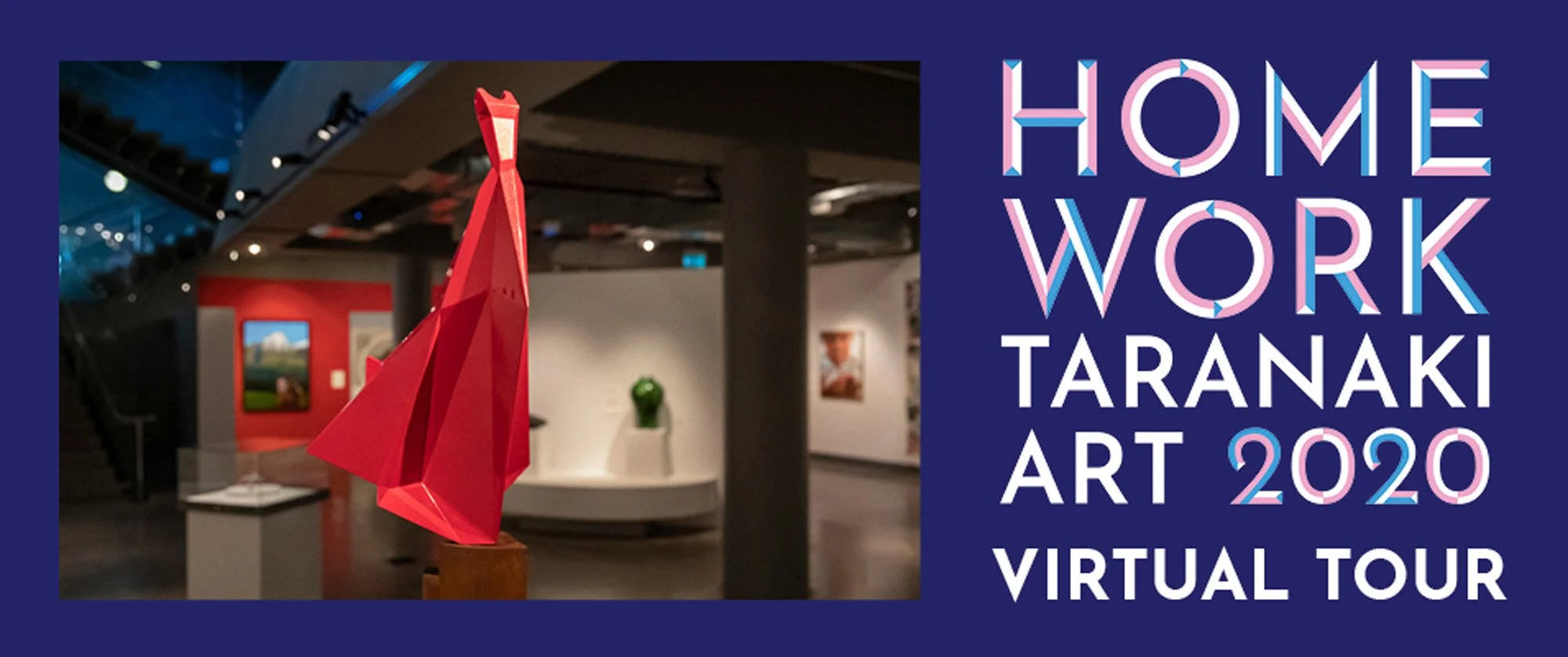
Alongside the VR project, I also supported the exhibition’s wider digital footprint. This included creating a virtual tour of the exhibition, which remains available online, and connecting the tour to additional artist interviews, VR content, and an interactive digital ruru hunt. The virtual tour was one of Puke Ariki’s most advanced at the time, combining exhibition documentation with interpretive layers and playful visitor engagement.
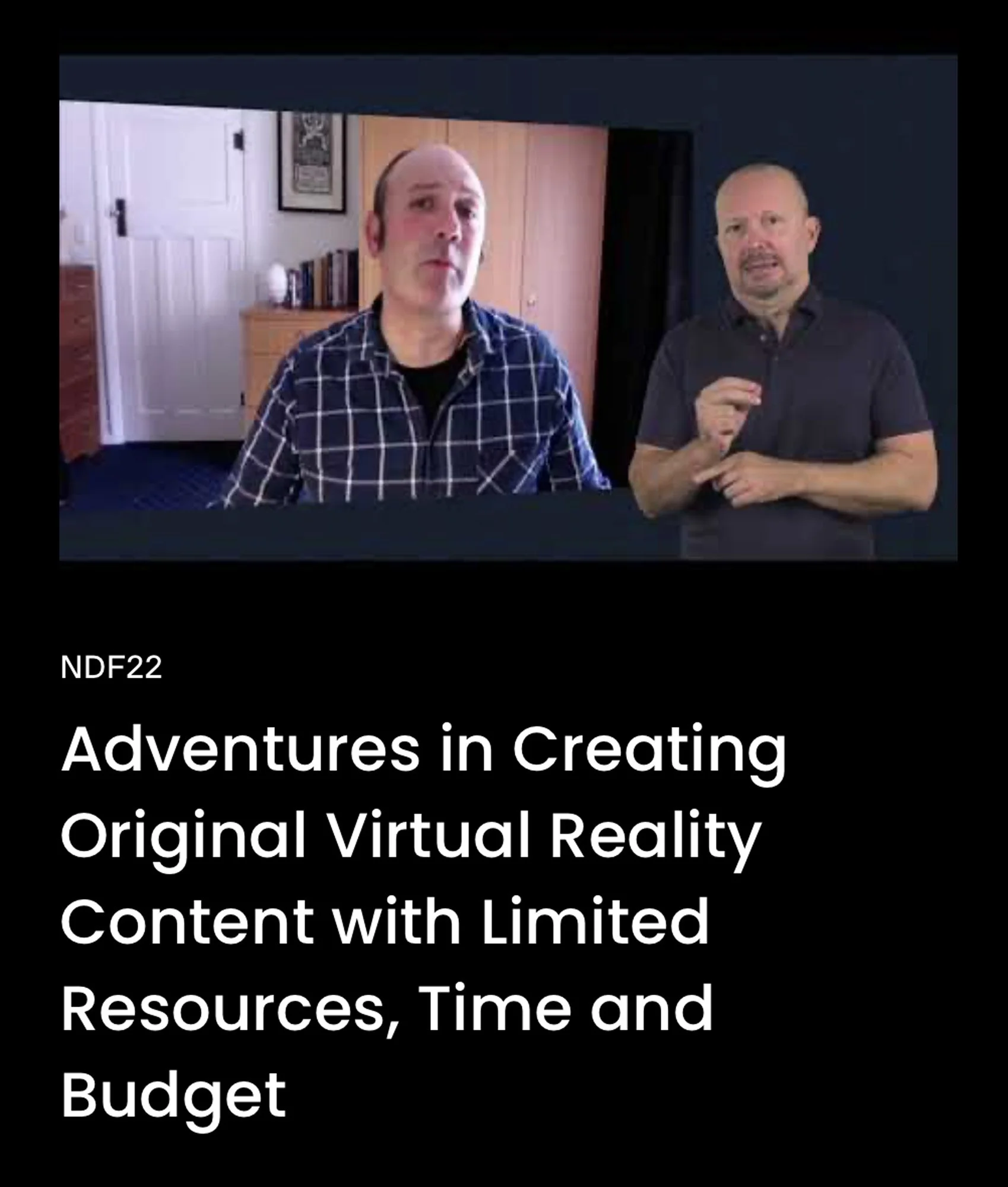
I later presented this work through the National Digital Forum in a talk titled Adventures in Creating Original Virtual Reality Content with Limited Resources, Time and Budget. The presentation focused on the practical realities of producing original VR content inside a regional museum context, including equipment, workflow, constraints, visitor experience, and the value of experimentation.
This project reflects a key part of my museum practice: identifying emerging technologies, testing them in realistic institutional conditions, and turning them into meaningful public experiences. Inside the Artists’ Studios used VR not as a spectacle for its own sake, but as a way to bring audiences closer to artists, their processes, and the intimate spaces where creative work is made.