State of Nature: Digital Interpretation and Immersive Exhibition Media
Photo by Rosie Moyes
Project: State of Nature digital interpretation and exhibition media
Exhibition: State of Nature: Picturing the Silent Forest
Location: Puke Ariki Museum, New Plymouth, Aotearoa New Zealand
Dates: 7 April 2023 – 5 November 2023
Role: Digital coordination, projection media, touchscreen interactives, story maps, photography, exhibition technology, online interpretation
Curator: Chanelle Carrick
Collaborators: Puke Ariki exhibition team, Rosie Moyes, Sarah Good
Media: Animated projection, immersive two-wall projection, touchscreen interactives, QR-linked digital content, online story maps, exhibition photography, companion photographic series
Tools / Methods: Digital compositing, animation, projection media, BrightSign, touchscreen development, 3D model presentation, ArcGIS StoryMaps, exhibition photography, sensory interpretation
Immersive projection, touchscreen interactives, story maps, exhibition photography, and digital coordination for a multi-sensory exhibition exploring Fanny Bertha Good’s botanical paintings and the changing ecology of Taranaki.
As part of State of Nature: Picturing the Silent Forest at Puke Ariki Museum, I worked closely with curator Chanelle Carrick to develop and deliver a wide range of digital, photographic, interactive, and sensory components for the exhibition. The exhibition explored the stories of Taranaki’s native forests through the botanical paintings of Fanny Bertha Good, whose work documented native flora and fungi during a period when much of the region’s forest was being cleared for farmland. Puke Ariki holds more than 200 of Good’s paintings, with a large selection shown together in State of Nature for the first time.
The exhibition was framed through both art history and ecology, using Good’s work to consider colonial landscape change, environmental loss, species decline, and the role of art in drawing attention to the natural world. The public exhibition page describes it as a multi-sensory journey through native forests, connecting Good’s botanical paintings with creative responses by contemporary local artists and present-day questions of environmental protection.
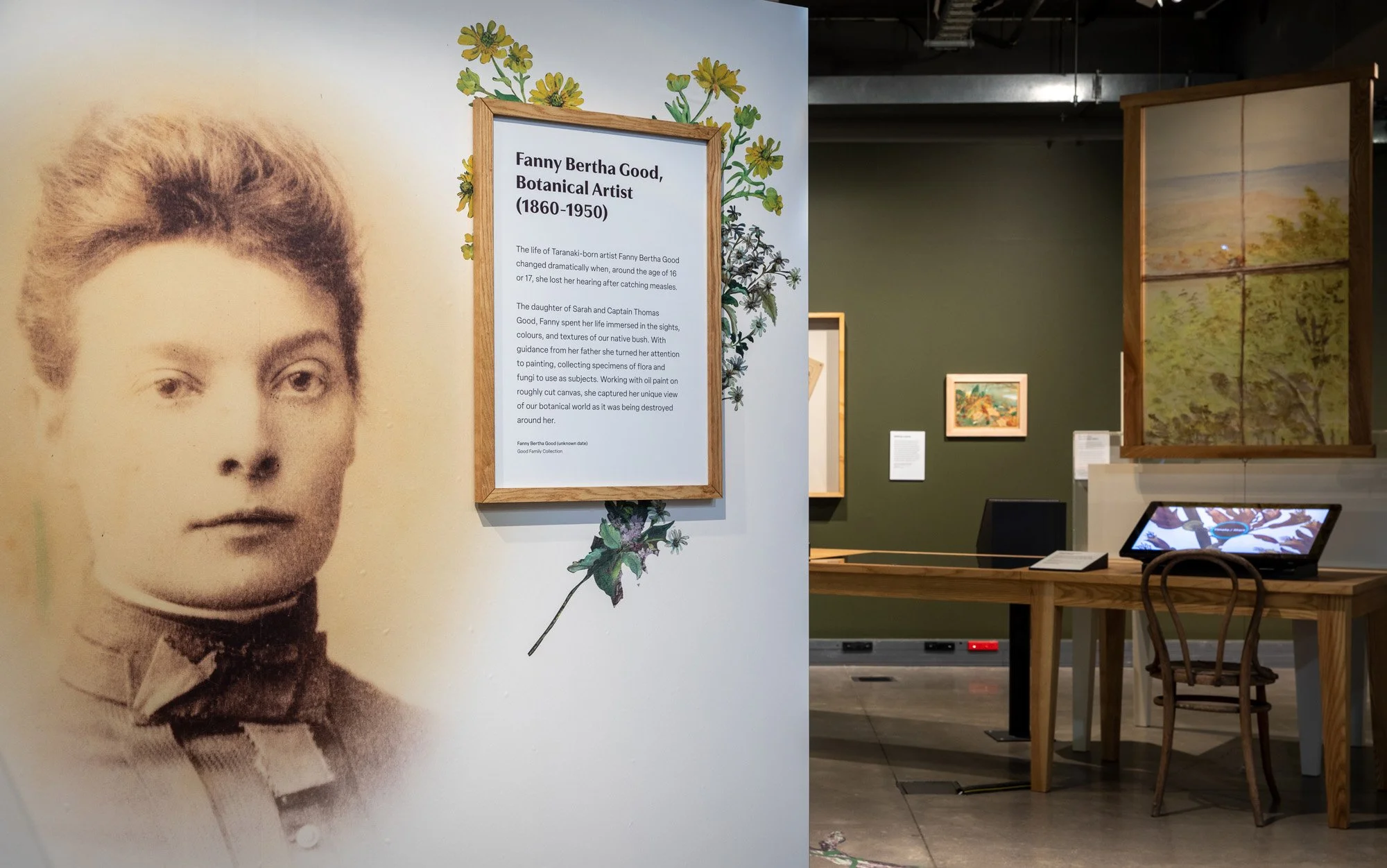
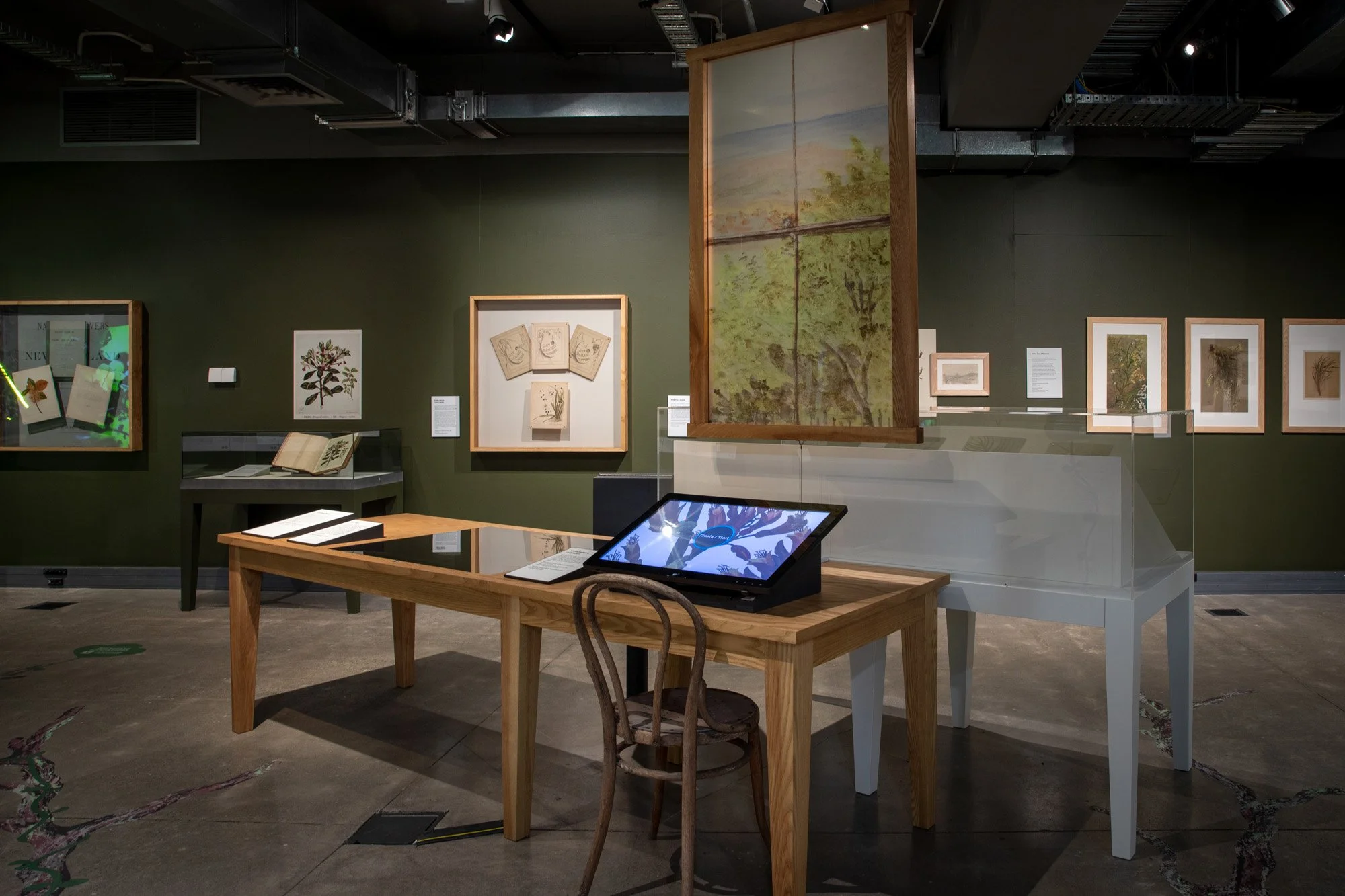
Photos by Rosie Moyes
My role was to support the exhibition as a digital coordinator across many of its media components, helping translate curatorial ideas into projection environments, touchscreen interactives, online interpretation, photography, and atmospheric digital experiences. This included developing key visual moments within the gallery as well as supporting the broader digital infrastructure of the exhibition, from QR-linked content to online story maps.
One of the major entrance components was a wall-sized animated projection based on a composite image of a burning or cleared forest. This work responded to the historical clearing of native bush in Taranaki for farming, contrasting the language of progress from the period with a contemporary ecological understanding of environmental destruction. I created an atmospheric image treatment with rising smoke, sound effects, and a burning wood scent element, turning the gallery entrance into a sensory threshold for the exhibition.
Photo by Rosie Moyes
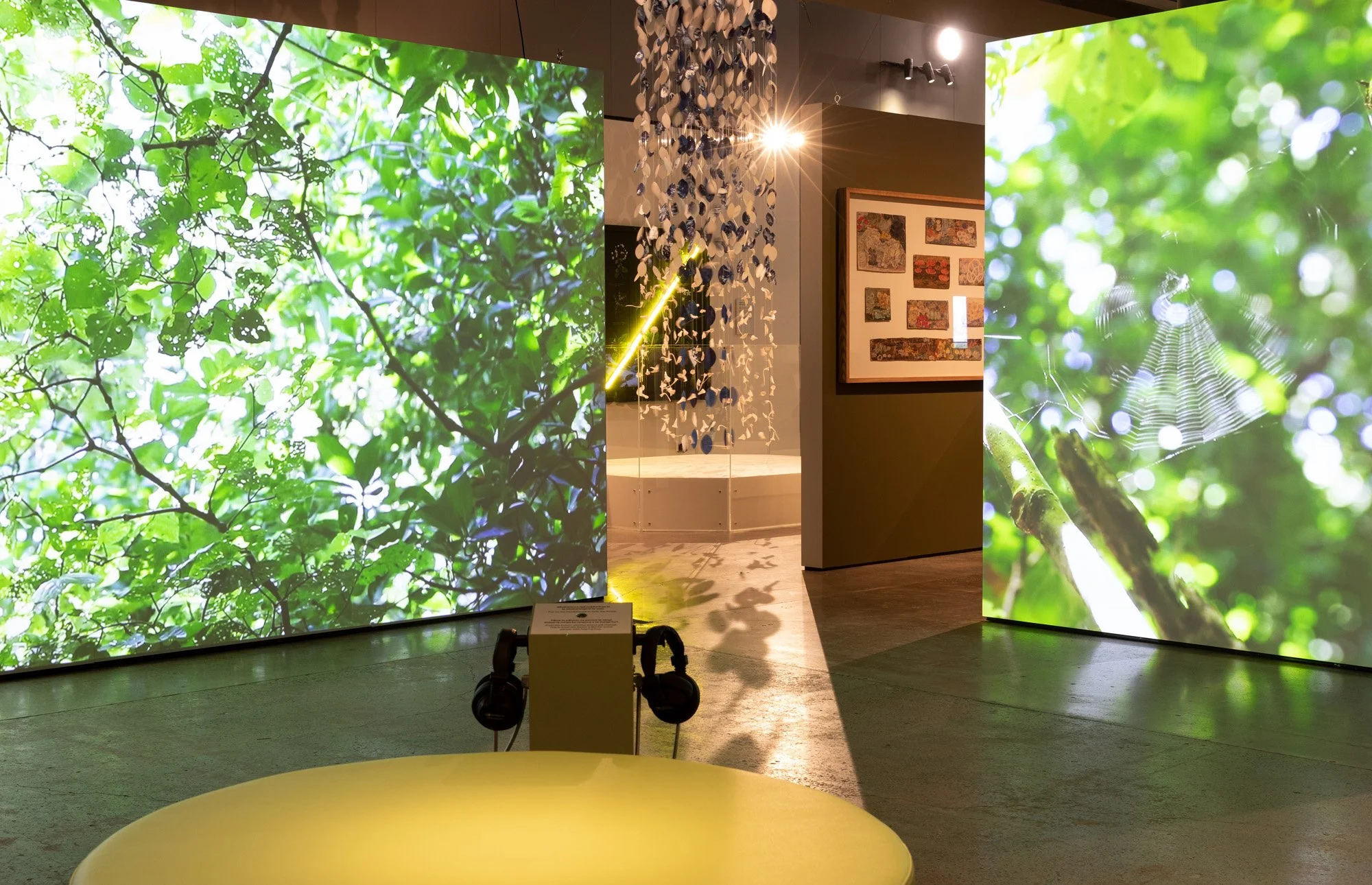
I also worked on an immersive projection space built around native bush imagery captured from the remaining forest on the Good family property. A protected area of bush still exists on the property through a QEII National Trust covenant, and we visited the site to gather photography and video material. These images were developed into a coordinated two-wall projection environment, using ambient close-ups, textures, movement, and layered detail to evoke the living forest that informed Good’s work.
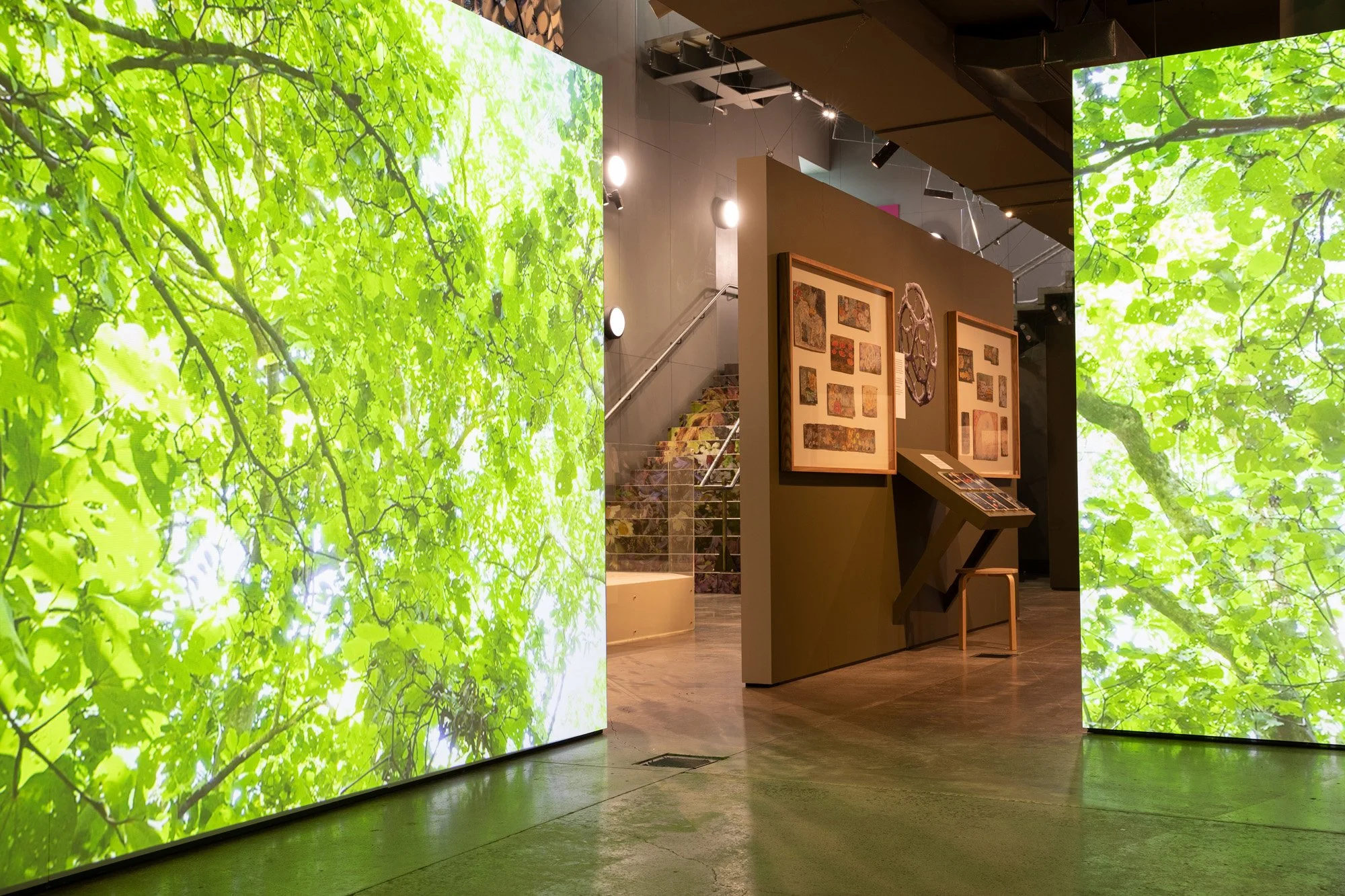
Photo by Rosie Moyes.
Photo by Rosie Moyes
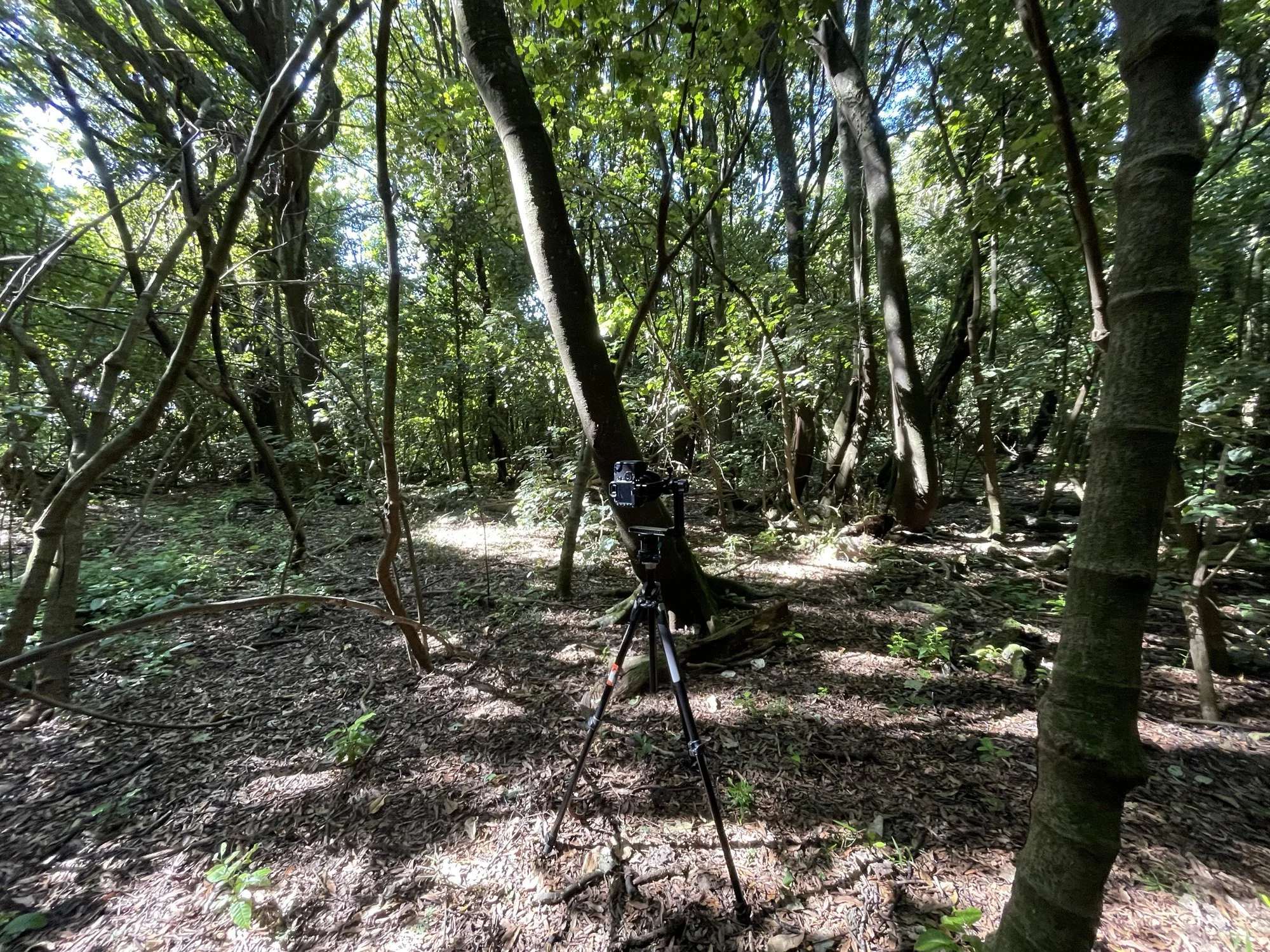
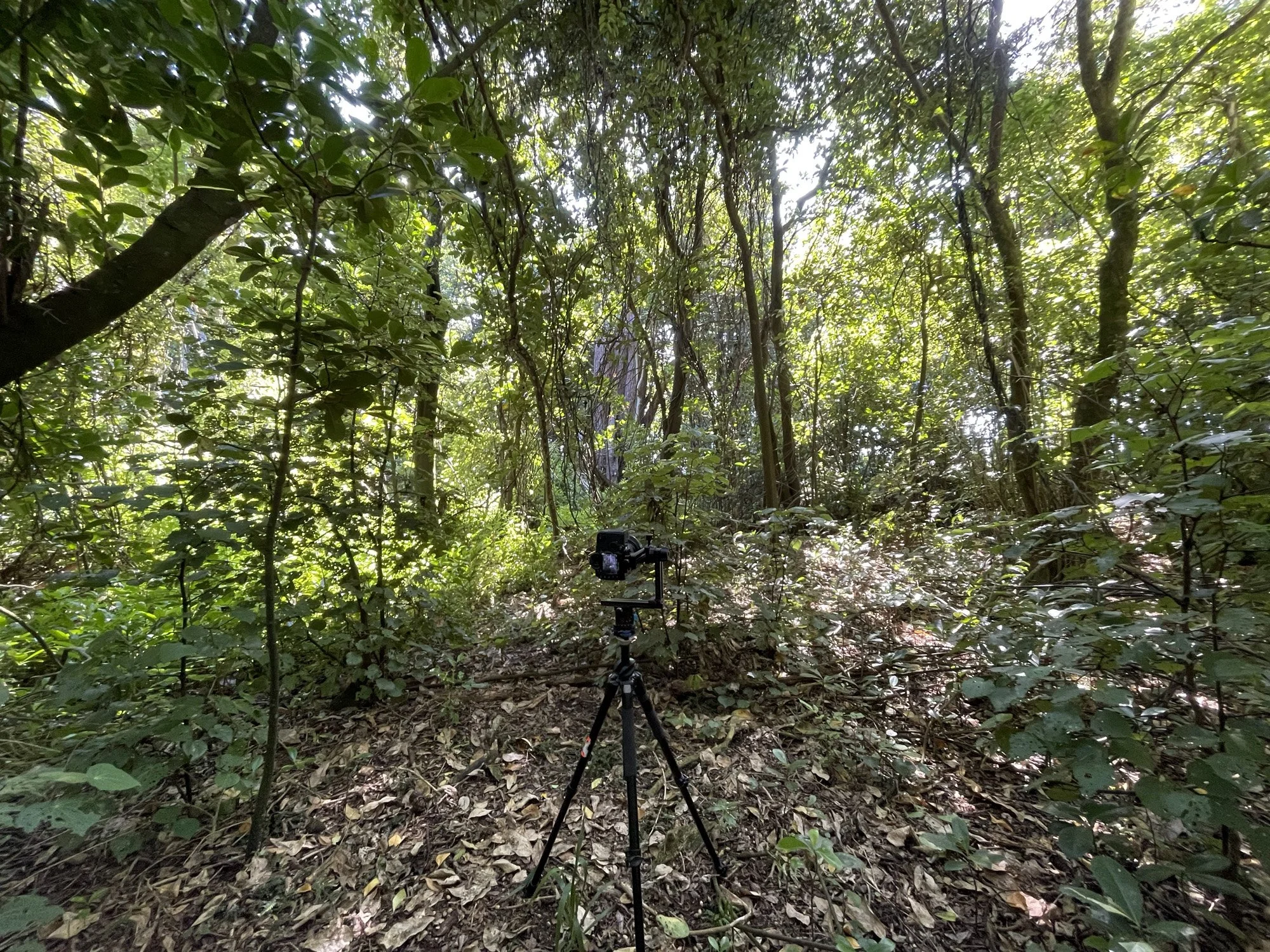
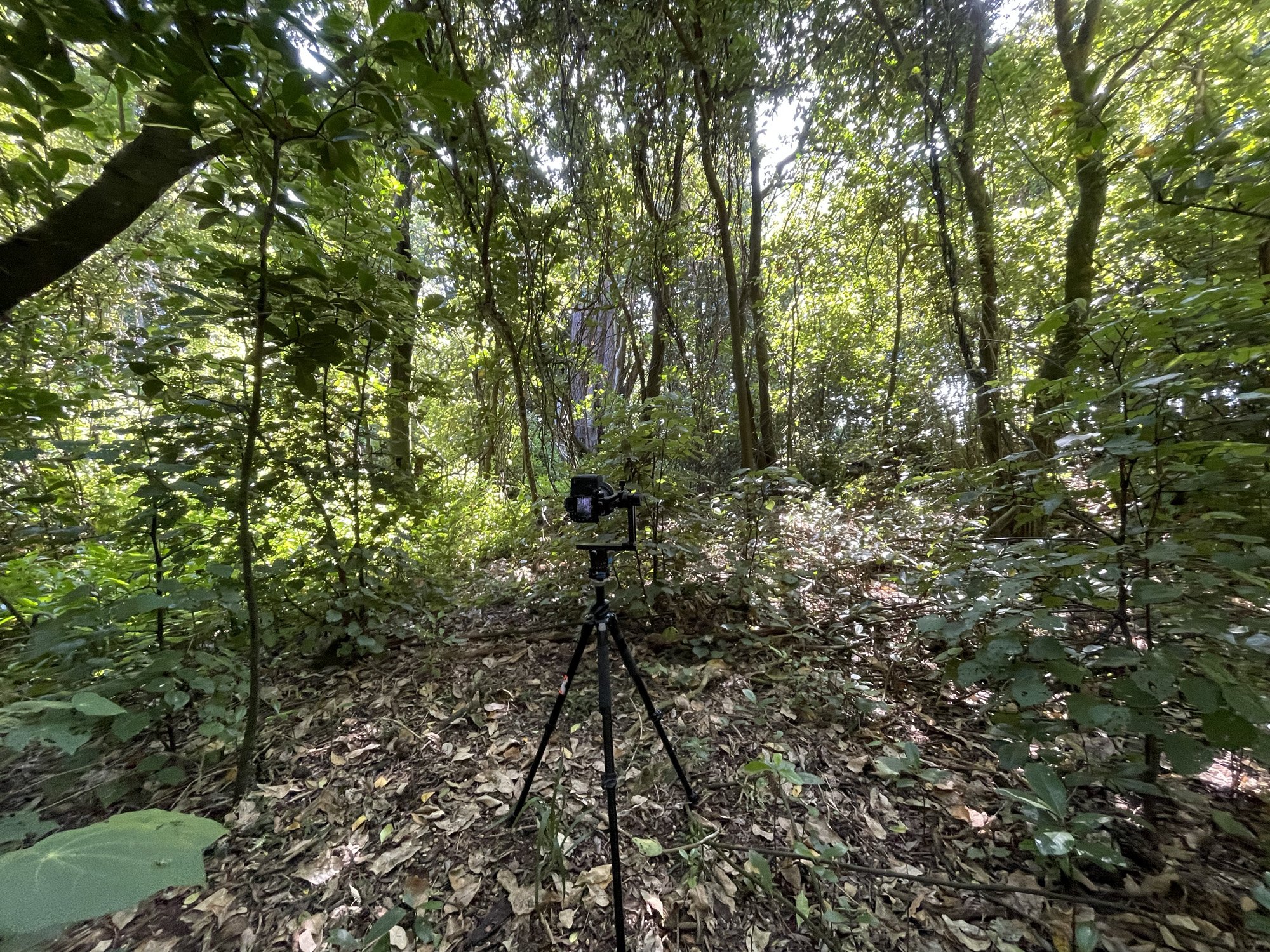
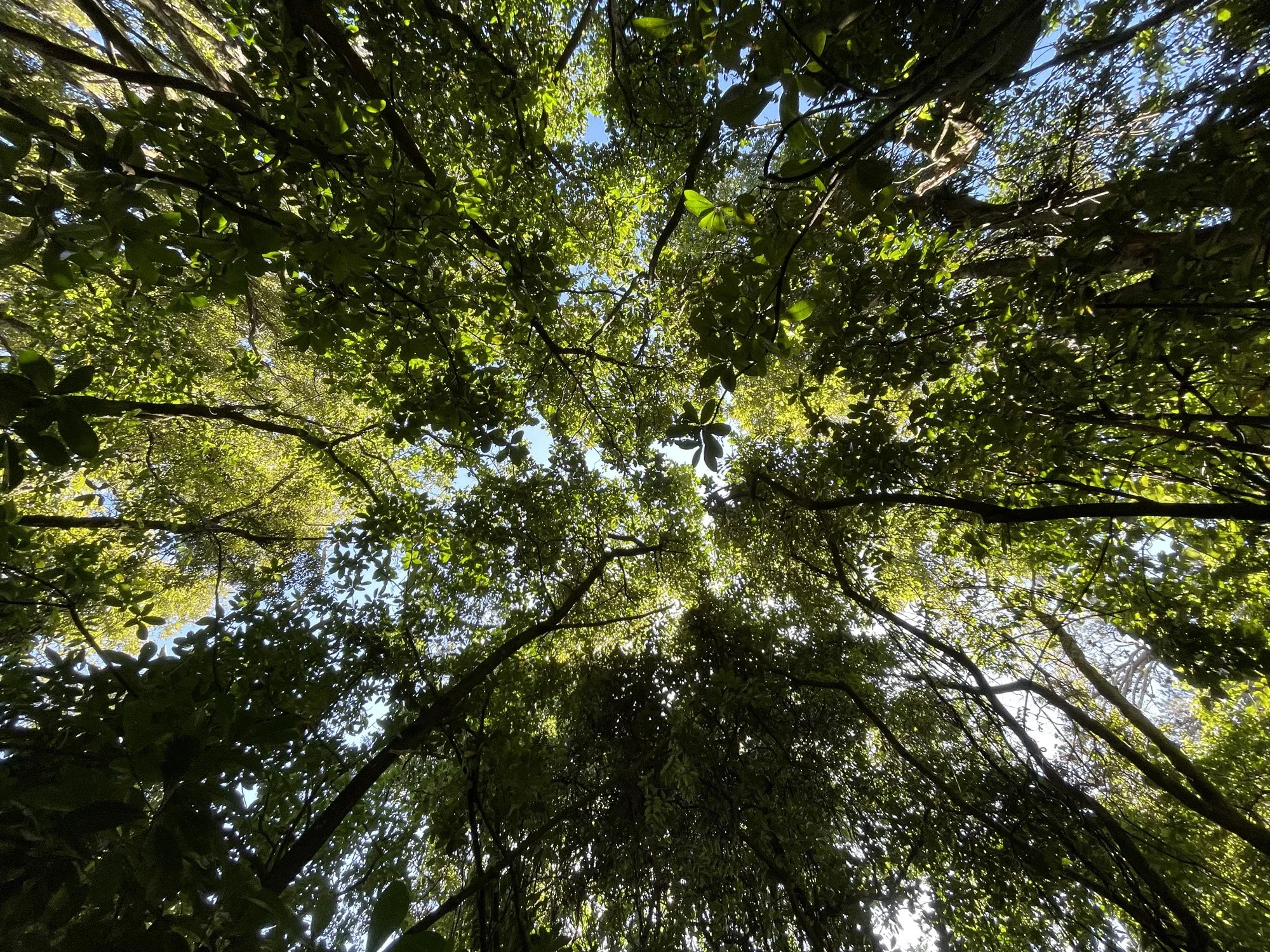
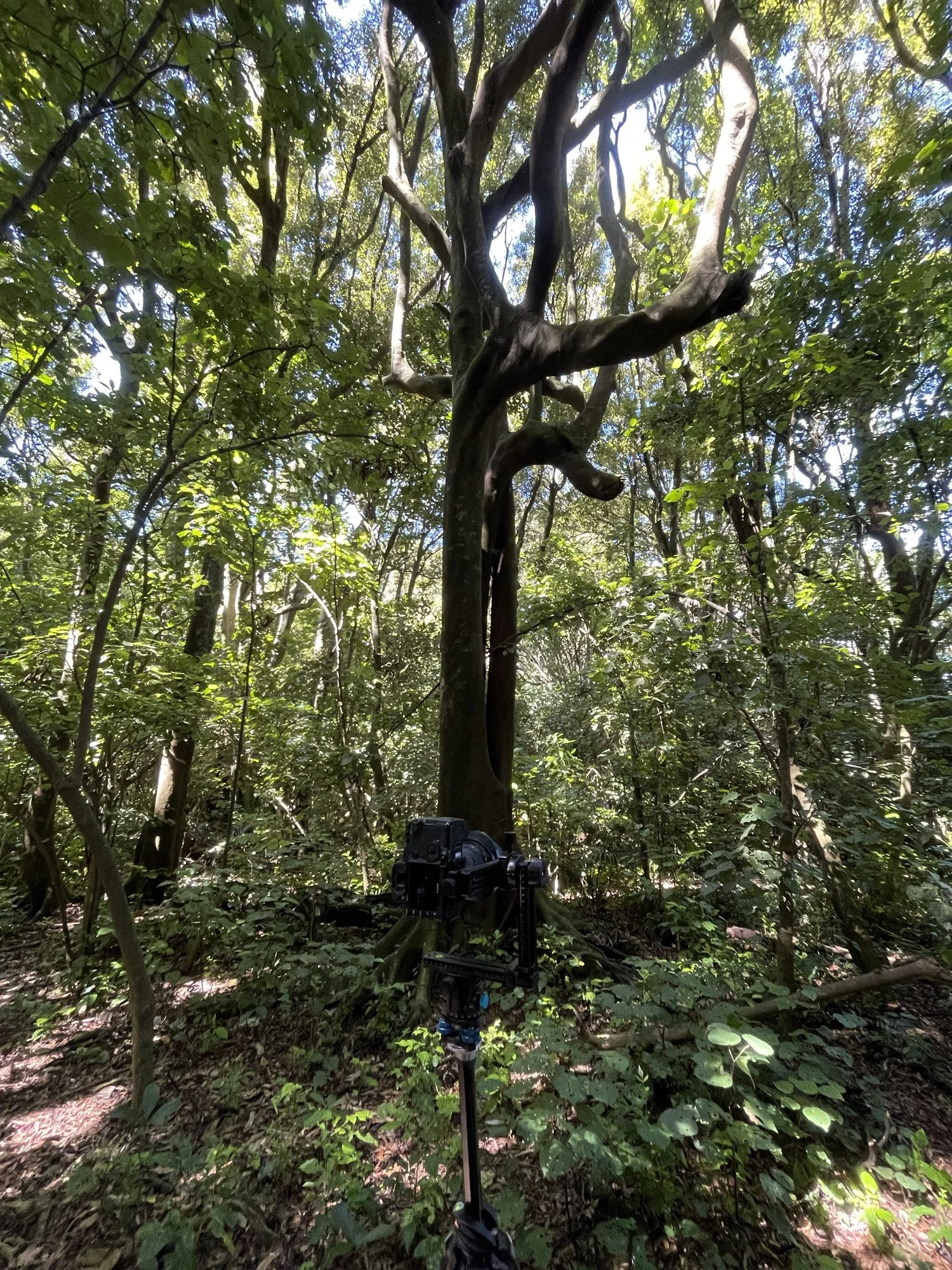
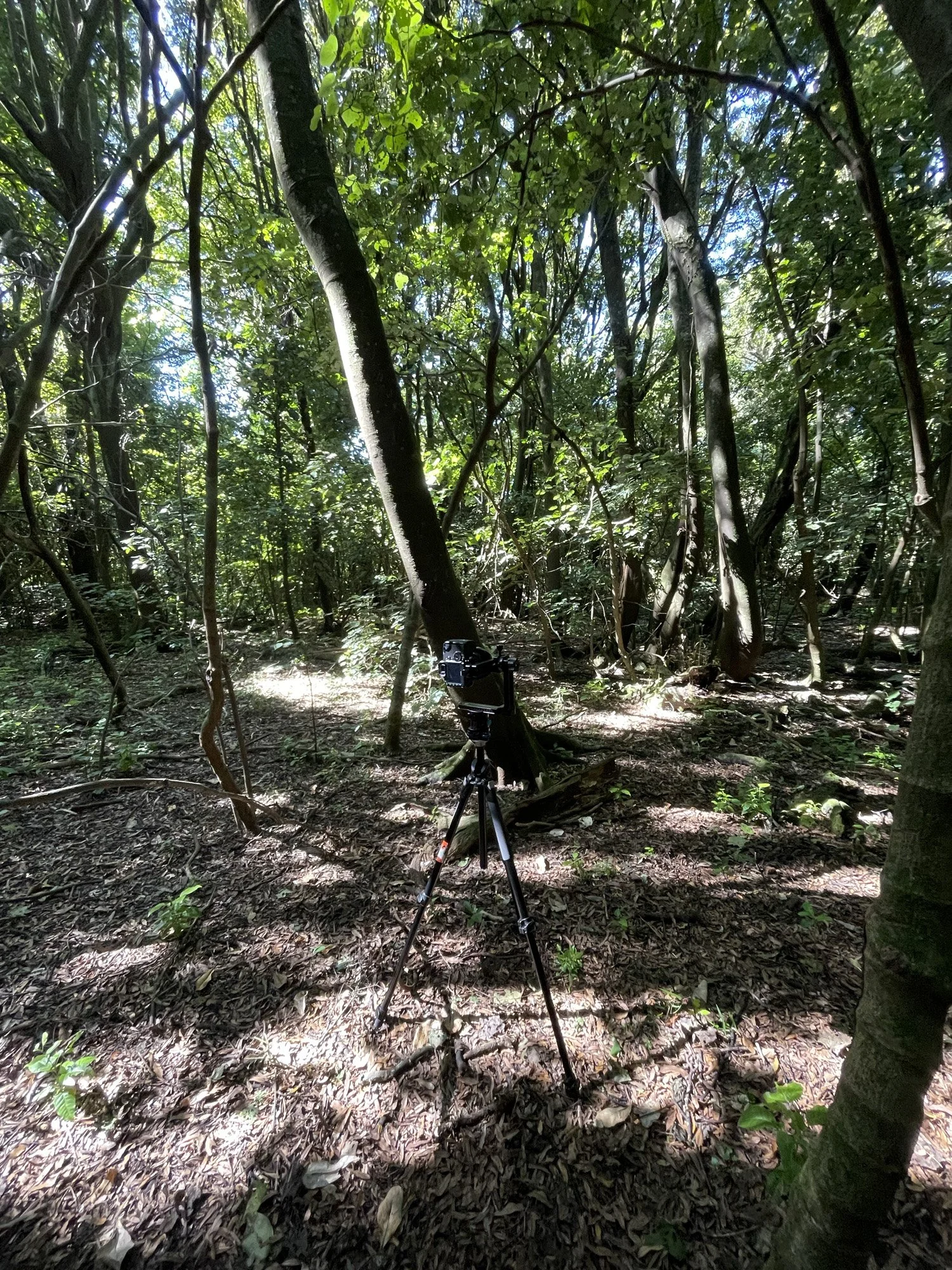
Photos from preserved native bush, Good Family property, Oeo Taranaki NZ
Beyond the projection environments, I built several touchscreen interactives for the exhibition. These included a 3D fungal anatomy interactive using rotating mushroom models, allowing visitors to explore and learn about different parts of a fungus, as well as a painting and plant-identification interactive that connected details in Good’s artworks with the species represented in them. These components were developed for touchscreen presentation using BrightSign and related exhibition media tools.
I also worked with the curator to create online story map components, including The Good Family and Notes on trip to New Zealand. These digital stories used historic photographs, diary observations, and family history to expand the exhibition beyond the gallery and provide additional context about the Good family’s experiences in colonial Taranaki. The museum’s exhibition page linked directly to these story maps as part of the public interpretation.
The exhibition also made extensive and intentional use of QR codes, with clearly labelled visual cues connecting different categories of gallery content to deeper online material. This was one of the most successful uses of QR-linked exhibition interpretation I worked on at Puke Ariki, generating stronger engagement than previous implementations because the codes were purposeful, clearly framed, and integrated into the visitor experience rather than treated as generic links.
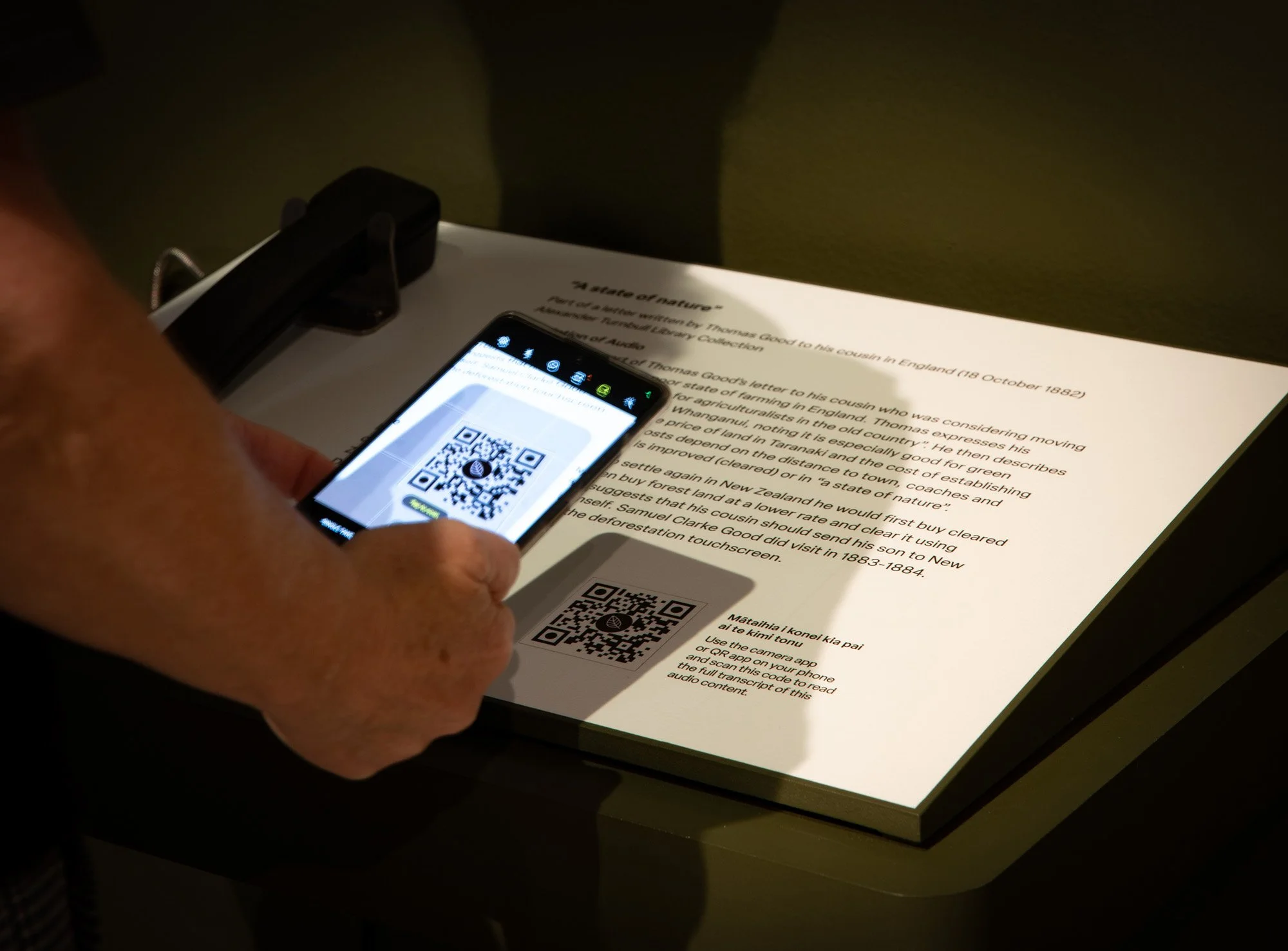
Photo by Rosie Moyes
In addition to the main exhibition, I supported a companion project with Sarah Good, a floral artist and descendant of Fanny Bertha Good. Working with Sarah’s contemporary floral interpretations of selected Fanny Good artworks, I oversaw photography with colleague Rosie Moyes to create a series of photographic portraits that connected the historical paintings with a living family and artistic lineage. This companion project extended the exhibition’s themes of memory, ecology, art-making, and cross-generational response.
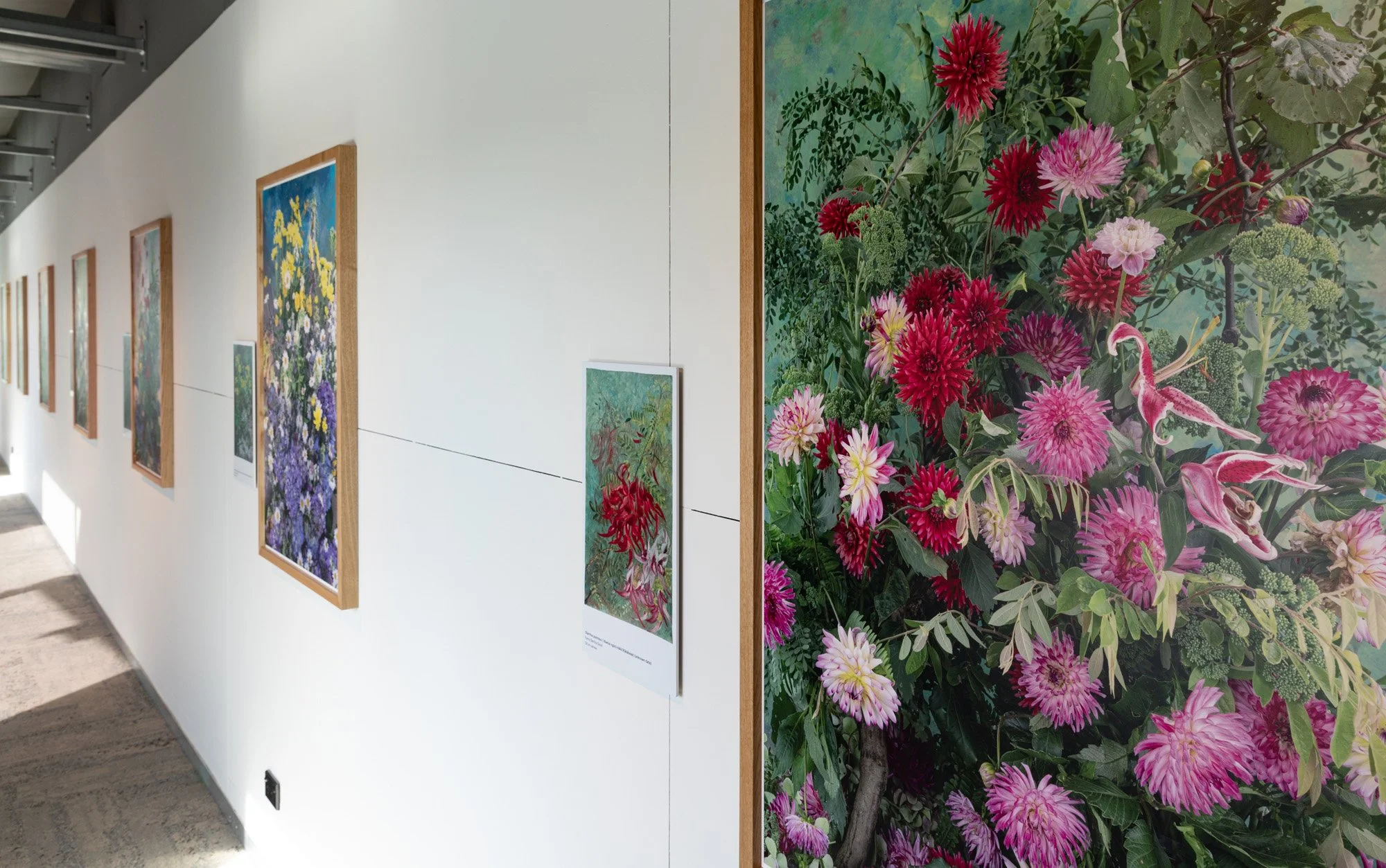
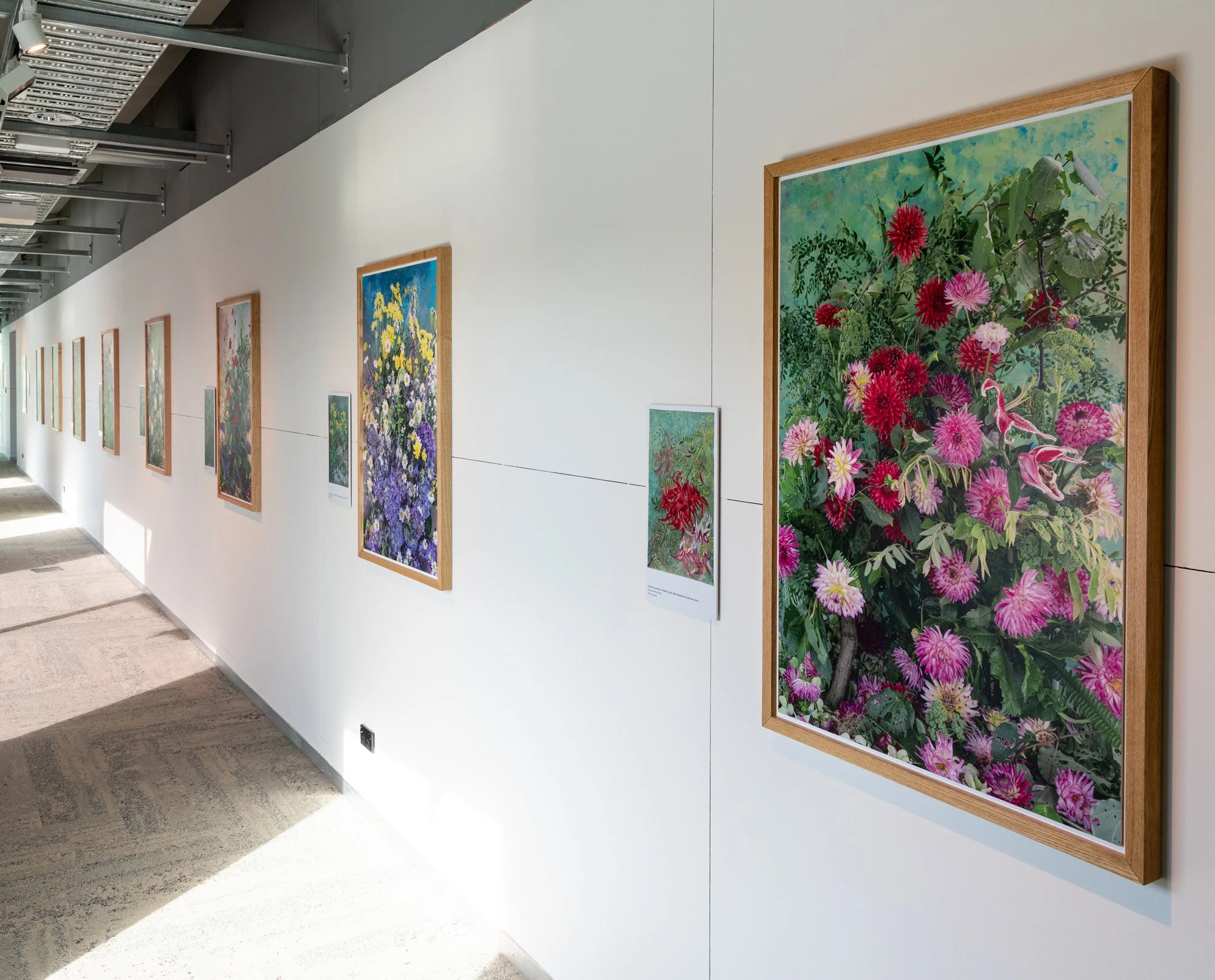
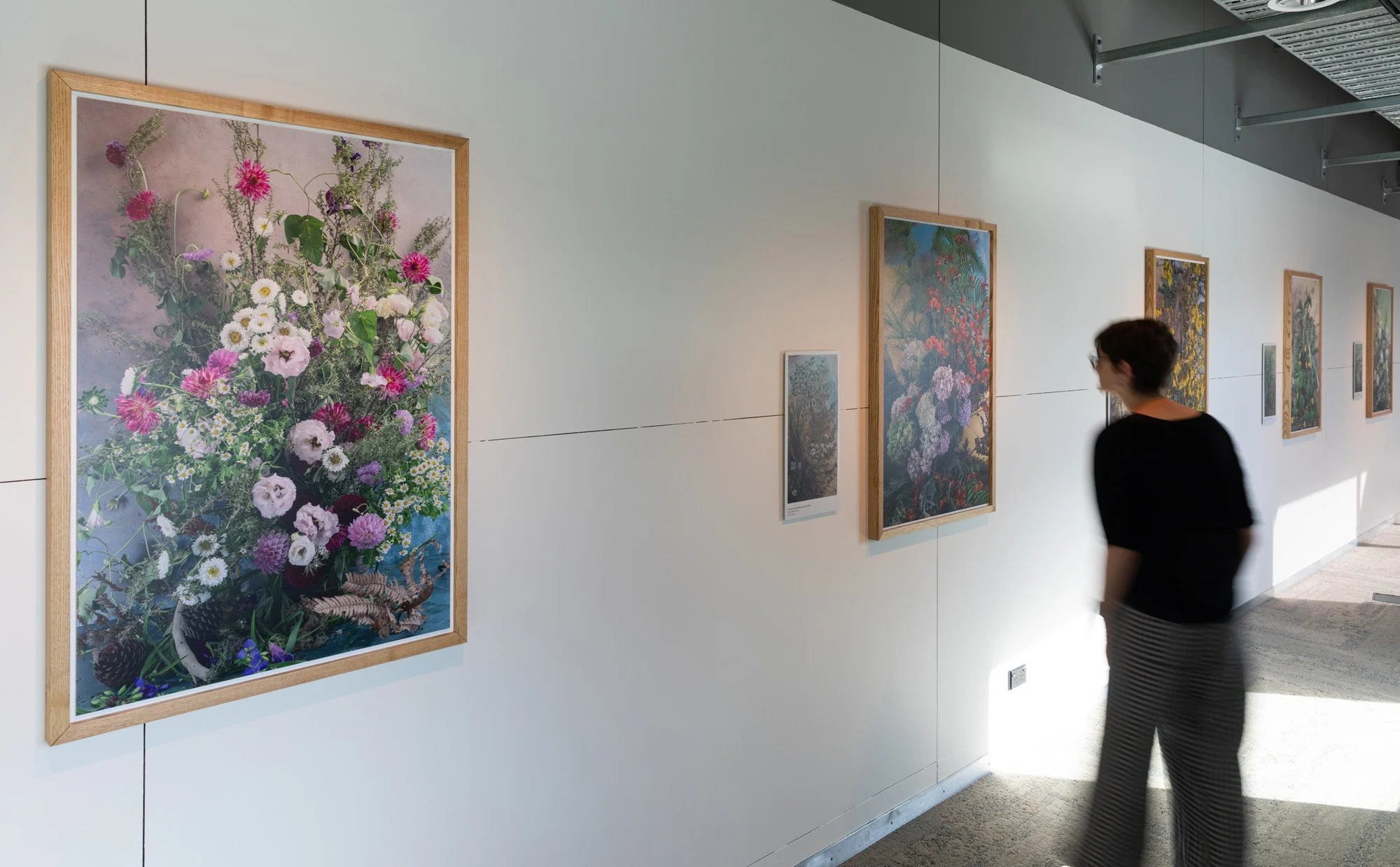
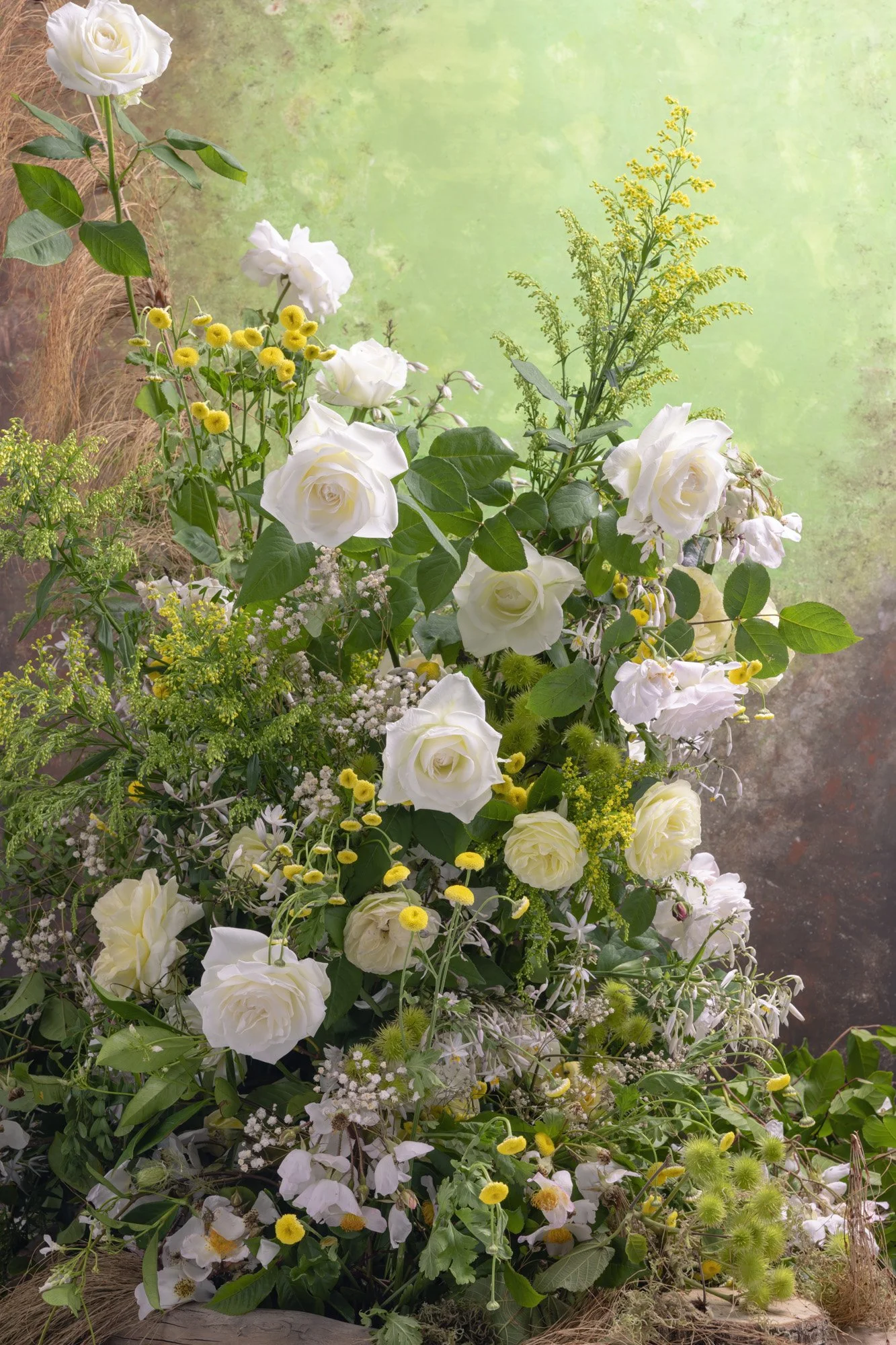
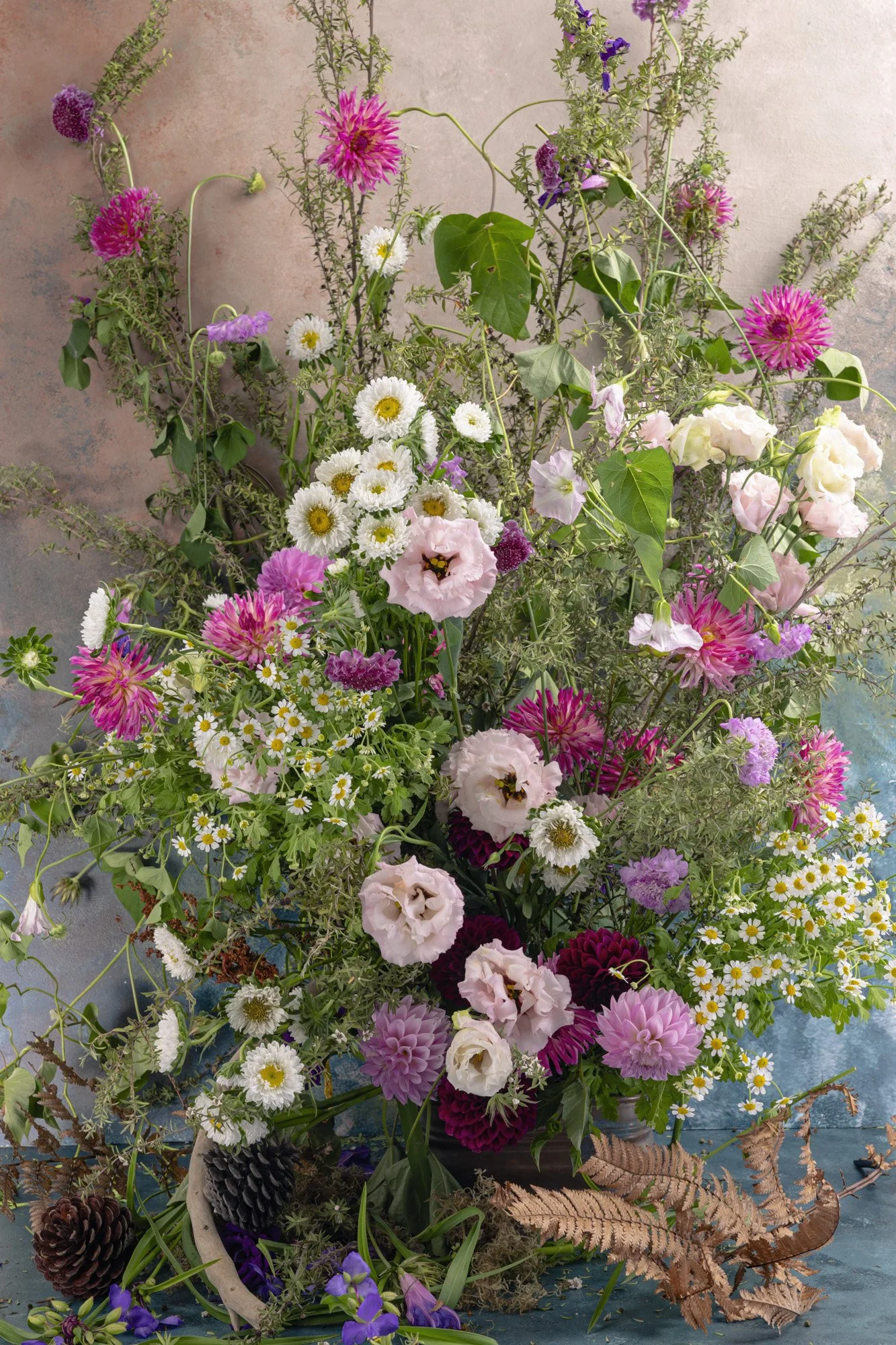
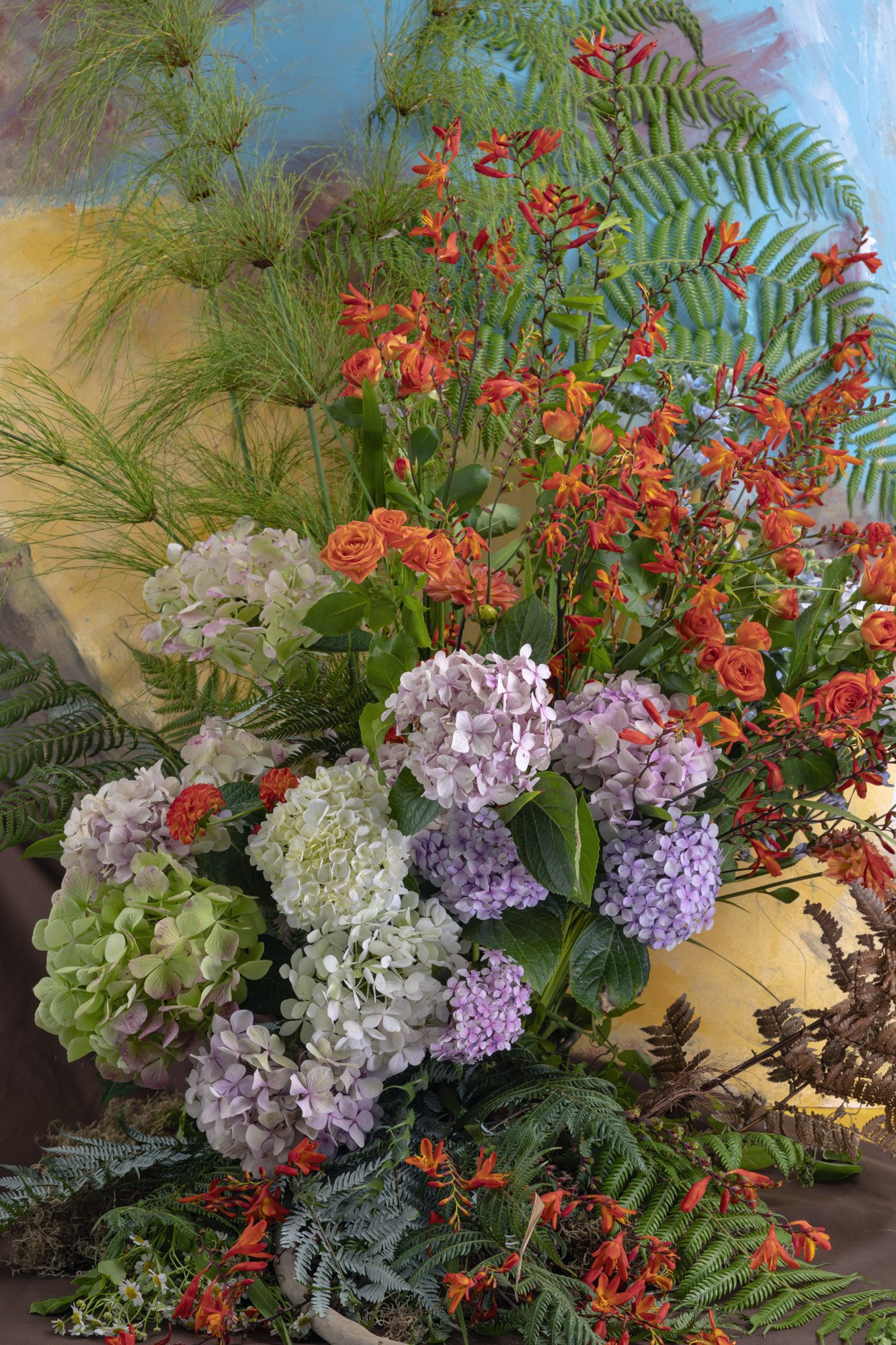
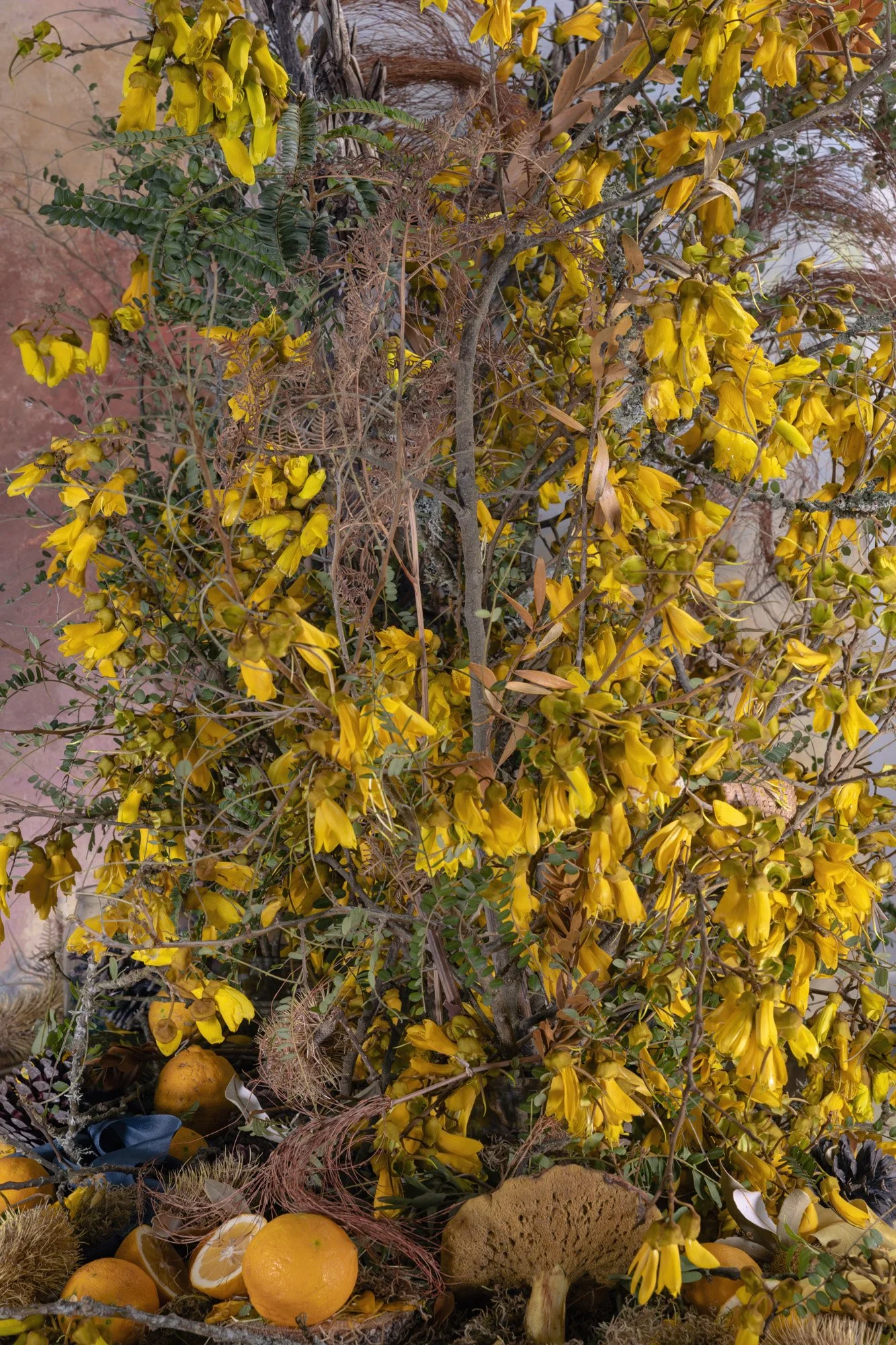
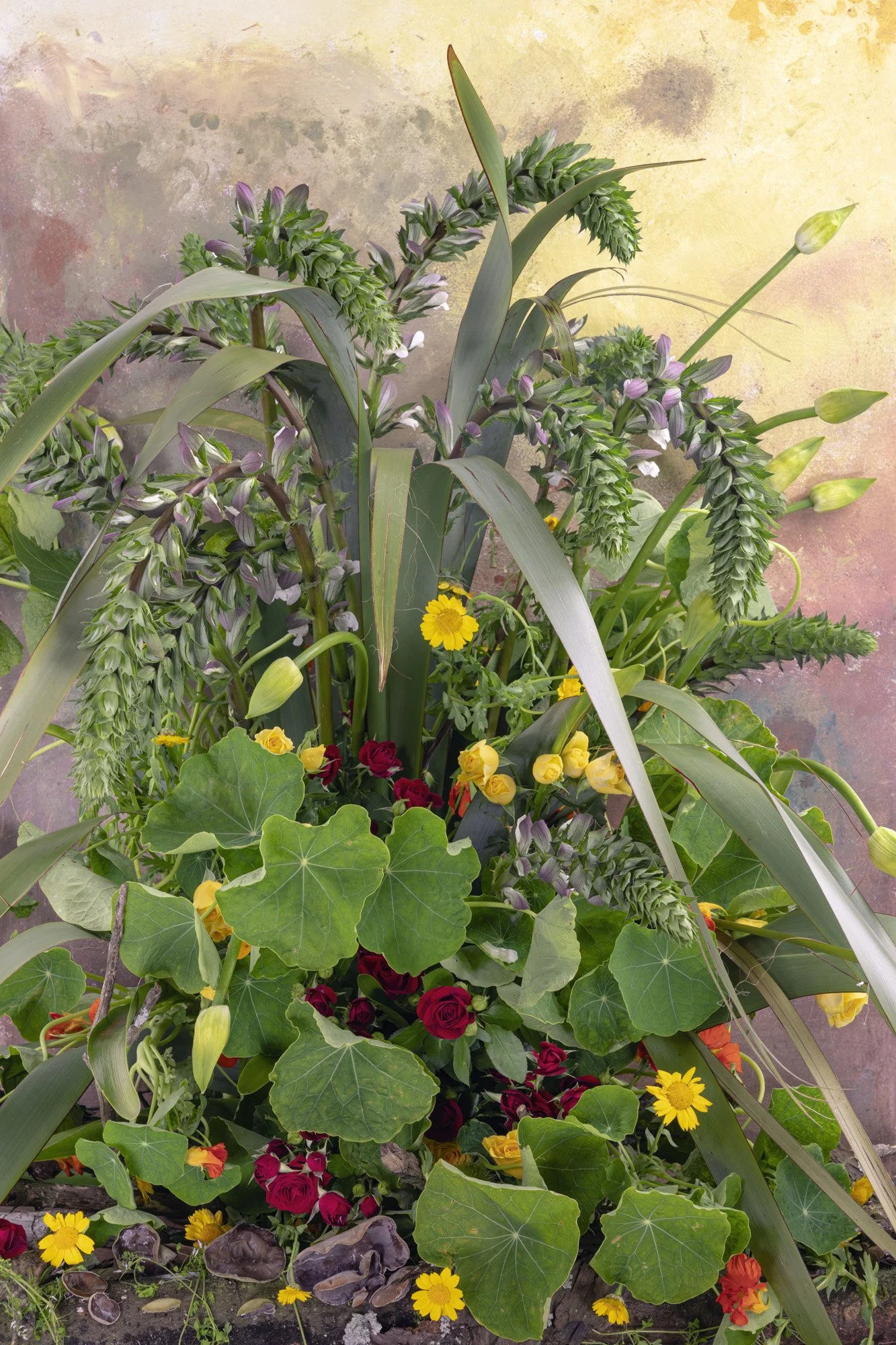
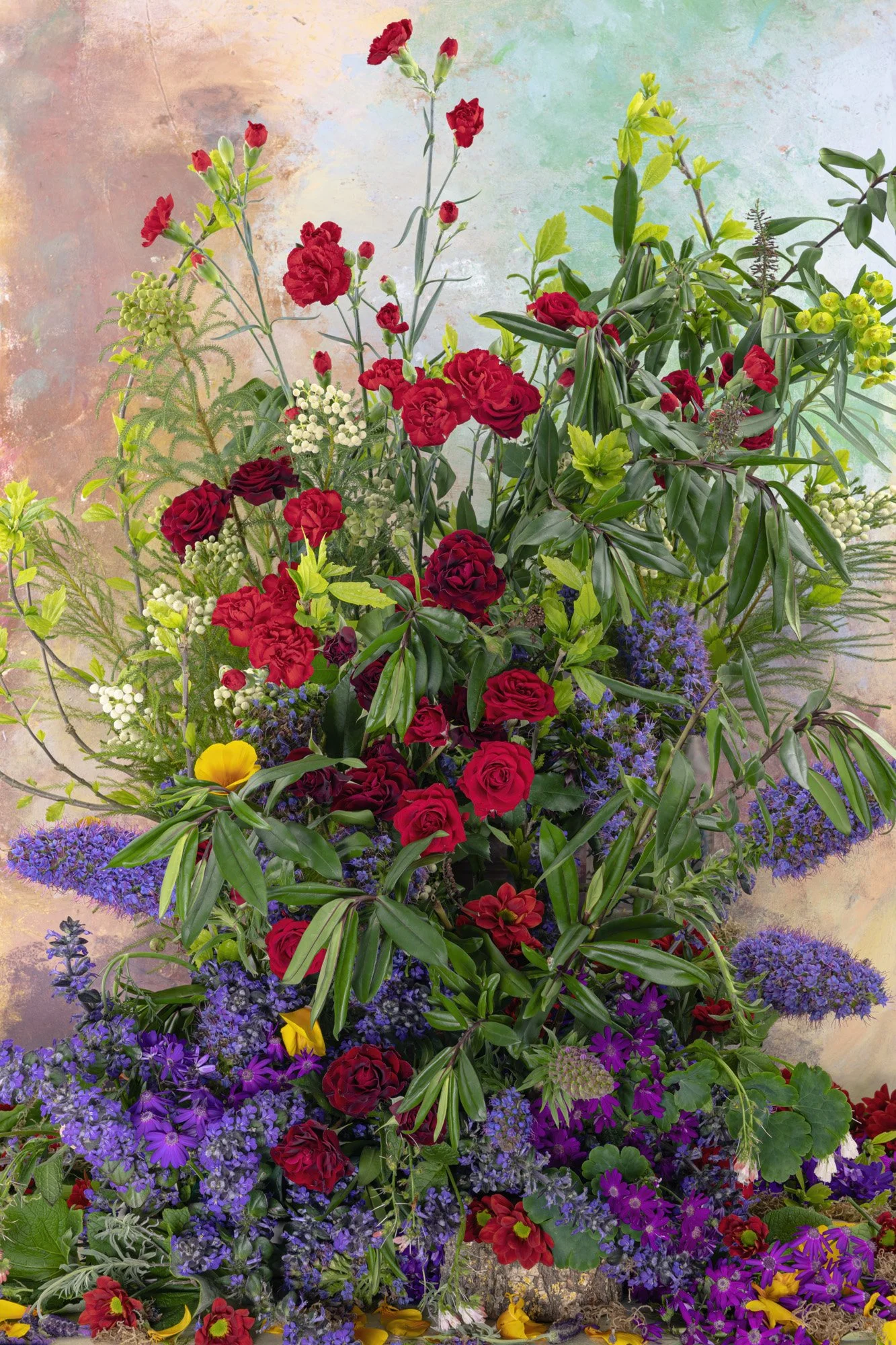
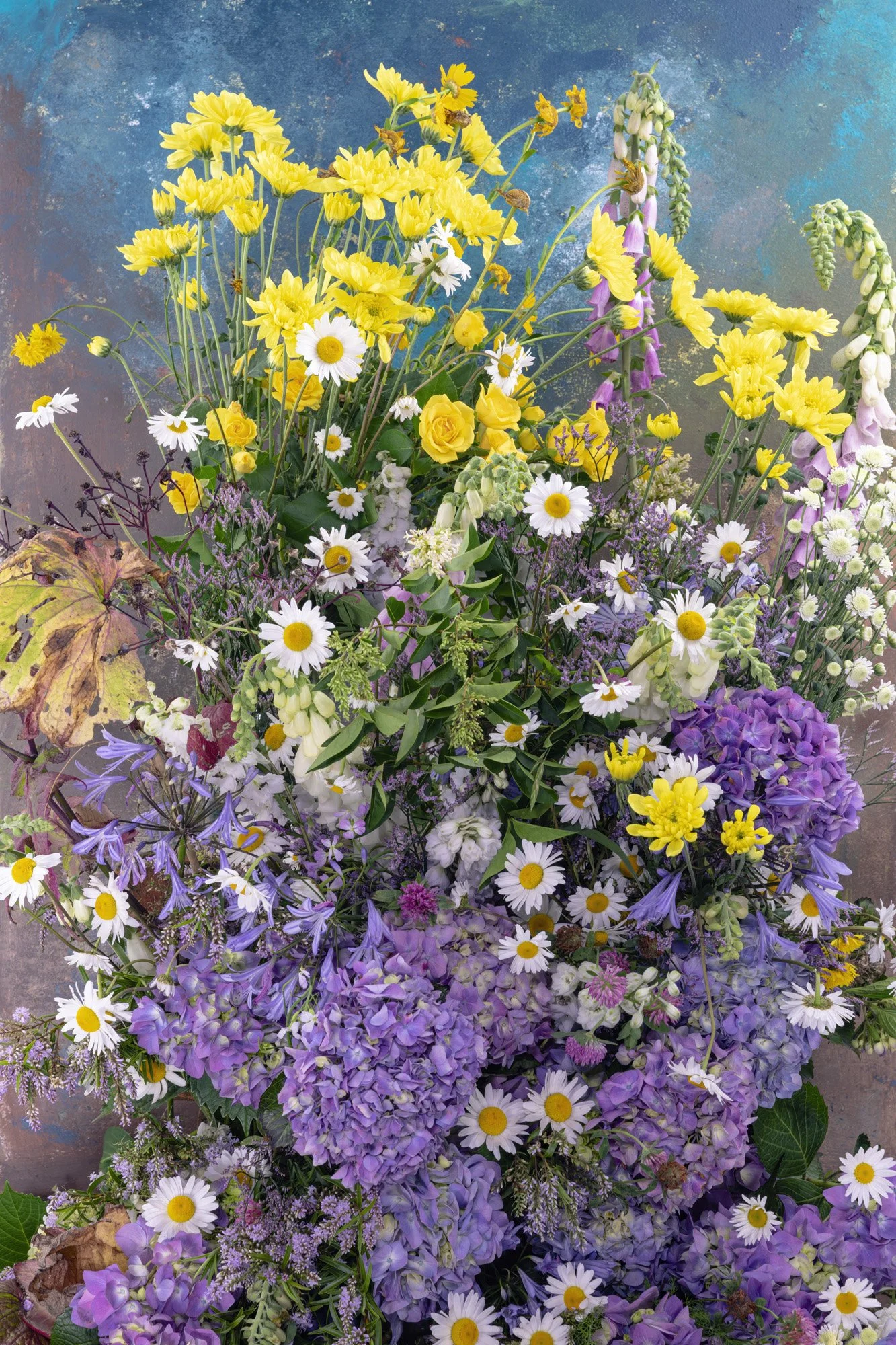
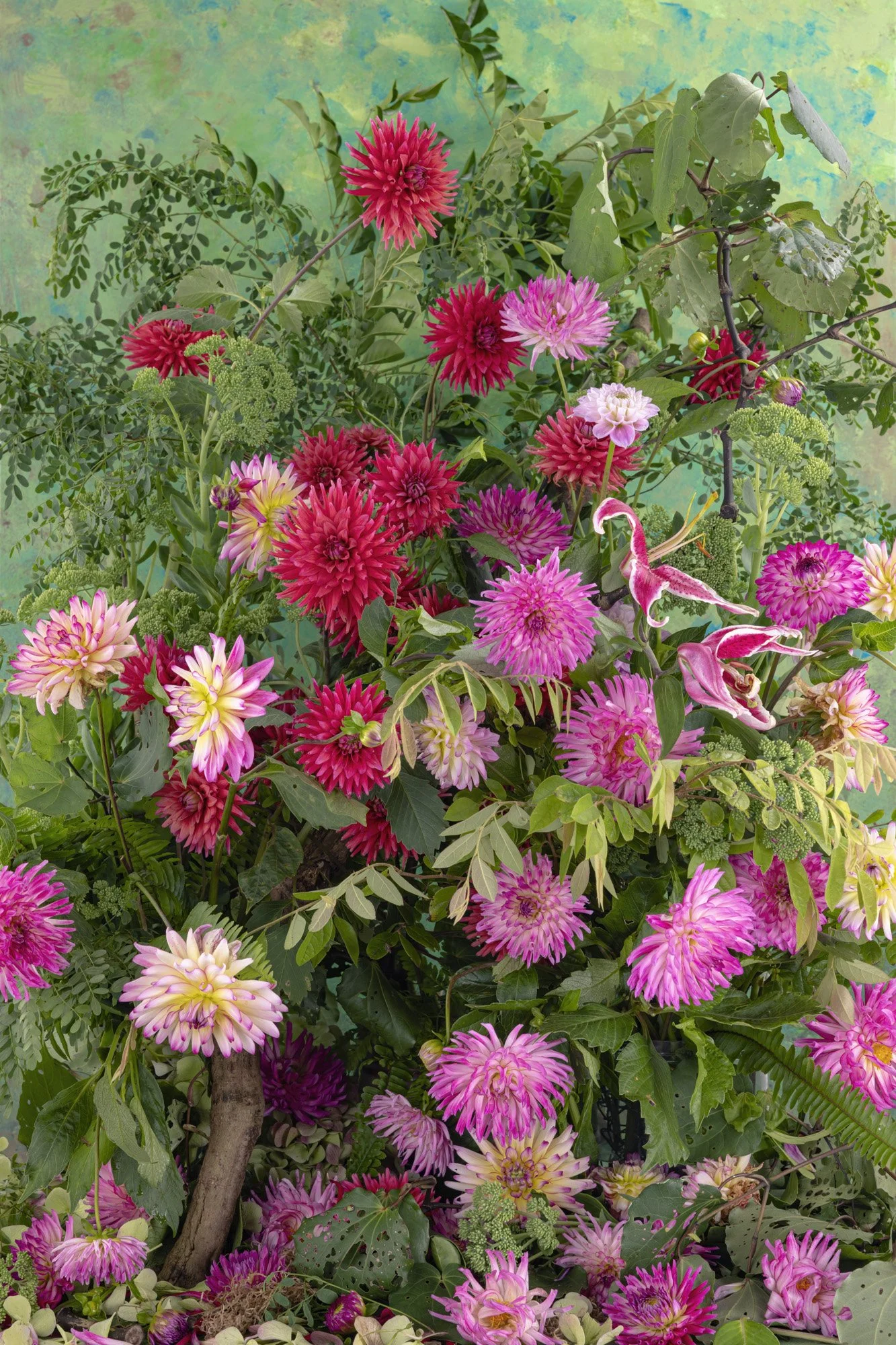
Sarah Good floral arrangements, photographed by Rosie Moyes and Nicholas Setteducato
State of Nature brought together botanical art, environmental history, contemporary creative practice, sensory design, and digital interpretation. My work across the exhibition demonstrates the breadth of my digital museum practice: supporting curatorial storytelling through projection, photography, interactive media, online content, exhibition technology, and visitor-focused interpretation.